Showing posts with label ROMANIA (Bucharest). Show all posts
February 14, 2020
3425 ROMANIA (Bucharest) - Postcrossing Meetup, Bucharest, 2 February 2020
Because February 2, 2020 was a palindrome day, the Romanian postcrossers decided to meet, and Mihnea Răducu chose for the postcard published on this occasion, a symmetrical building, CEC Palace. Built in eclectic style in 1900 as a new headquarters for Romania's oldest bank, the public savings institution Casa de Depuneri, Consemnațiuni și Economie, later known as C.E.C. and nowadays CEC Bank, the palace is topped by a glass and metal dome. The entrance features an arch supported by two pairs of columns in composite style. The four corners are decorated with gables and coats of arms and ending in Renaissance domes.
January 21, 2020
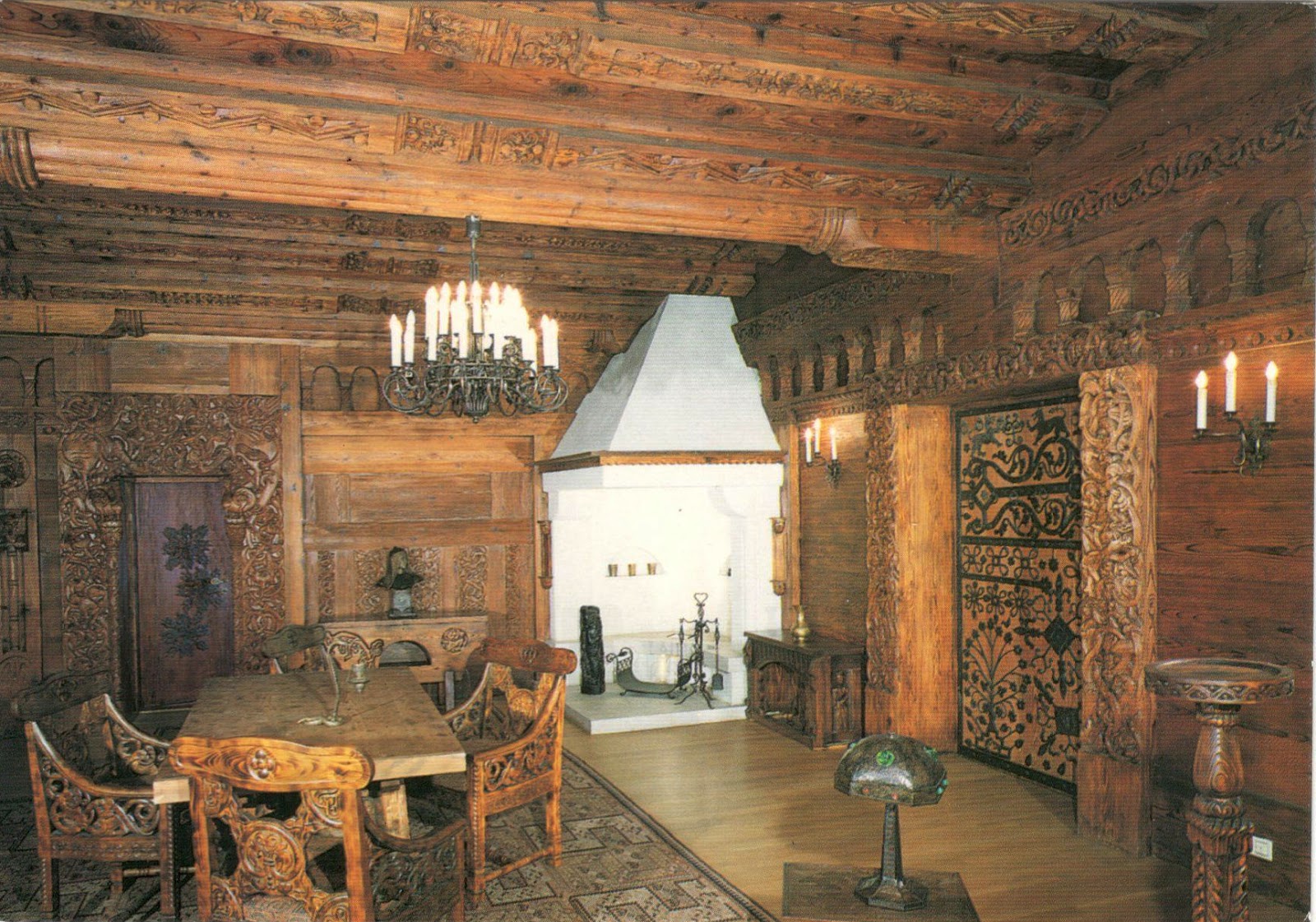
3003, 3378 ROMANIA (Bucharest) - Cotroceni Palace
Posted on 30.03.2017, 21.01.2020
Between 1679 and 1681, Şerban Cantacuzino, Prince of Wallachia, has deforested a densely wooded area of the former Vlăsia forest, on the right bank of the Dâmboviţa River, on Cotroceni Hill, and erected a monastery on the place of an old wooden hermitage. The monastery was surrounded by walls and had a beautiful church built in a a style that anticipated the Brâncovenesc style. Inside the monastery, the prince raised also a royal residence.
![]() |
| 3378 Cotroceni National Museum - The Norwegian Room |
Over time, the Cotroceni Ensemble has undergone several changes, but kept all the time both religious function as well as the one of princely residence. Barbu Ştirbey (1849-1853) restored and redecorated the palace, which became his summer residence. In addition, to facilitate links with Bucharest, the prince built a new road that cut the great domain of the monastery, thus separating the princely area from the one of the future Botanical Garden, of which beginnings date back to 1860.
January 14, 2020
3356 ROMANIA (Bucharest) - Postcrossing Meetup, Bucharest, 1 December 2018
![]() |
| 3356 The twelfth postcard of the series "100 years since the Great Union of Romania" (12/12) - the Michael the Brave 30th Guards Brigade on National Day parade |
The last meeting of the Romanian postcrossers in the year of the Centenary of the Great Union took place on Bucharest, of course on December 1, the National Holiday of Romania. Mihnea Răducu chose for these 12th postcard an image from the parade that took place with this occasion, featuring the Michael the Brave 30th Guards Brigade. This unit is a primarily ceremonial, as well as combat unit of the Romanian Land Forces, and was established on 1 July 1860 through a decree issued by Prince Alexandru Ioan Cuza as the 1st Honor Guard battalion of Tirailleurs, which ensured the security of Royal palaces.
Etichete:
Edited special for postcrossing,
EU - EUROPE,
EU-Romania,
Militaria,
Postcrossing meetings,
ROMANIA,
ROMANIA (Bucharest),
stamps (complete series)
January 4, 2020
3334 ROMANIA (Bucharest) - Postcrossing Meetup, Bucharest, 7 October 2018
![]() |
| 3334 The tenth postcard of the series "100 years since the Great Union of Romania" (10/12) - Xenofon Street in Bucharest. |
On 7 October, the meeting of the Romanian postcrossers in the year of the Centenary of the Great Union took place again in Bucharest, and Mihnea Răducu chose for the postcard the road to Bucharest's highest altitude point, which is a unique one in the capital city of Romania. Located in the Cotroceni area, the Xenofon street, as it is named, after Greek philosopher author of famed Anabasis, is often referenced as the city's only stairways street. The 220 years old and narrow road is less than 100 meters long but has 70 steps (divided into two sections), and links the Constantin Istrati street to the Suter alley.
February 5, 2018
3261 ROMANIA (Bucharest) - Postcrossing Meetup, Bucharest, 20 January 2018
![]() |
| 3261 The second postcard of the series "100 years since the Great Union of Romania" (2/12) - The interior of the Romanian Athenaeum |
The second meeting of the Romanian postcrossers in the year of the Centenary of the Great Union (the 34th in total) took place on January 20, 2018 at the premises of the Philatelic Association of Bucharest. Since around this date the Romanians had other two reason to celebrate, these were also mentioned on the postcard. The first one was the National Culture Day, celebrated on January 15, the day in which in 1850 was born Mihai Eminescu, the Romanian national poet.
Etichete:
Edited special for postcrossing,
Postcrossing meetings,
ROMANIA,
ROMANIA (Bucharest),
stamps - Christmas & New Year,
stamps (complete series)
Locaţia:
București, România
December 7, 2017
3212 ROMANIA (Bucharest) - Postcrossing Meetup, Bucharest, 2 December 2017
![]() |
| 3212 The first postcard of the series "100 years since the Great Union of Romania" (1/12) - the Arch of Triumph in Bucharest. |
On December 1 1918, the National Assembly of Romanians of Transylvania and Hungary, consisting of representatives of the Romanians in Transylvania, Banat, Crişana, Satmar and Maramureş, convened in Alba Iulia, decreed "the unification of those Romanians and of all the territories inhabited by them with Romania". Since 1990, the Great Union Day (which marks the unification not only of the mentioned regions, but also of Bessarabia and Bukovina with the Romanian Kingdom) was established as the National Holiday of Romania.
October 19, 2017
3172 ROMANIA (Bucharest) - The 6th Meetup of the group Postcrossing & Philately, Bucharest, 7 October 2017
With the occasion of the 6th meetup of the group Postcrossing & Philately, which held in Bucharest, on 7 October 2017, Eugen Mihai edited a special postcard, in limited serie (60 copies). In image is the Suter Palace, now Carol Parc Hotel, located near historical Carol Park, on Filaret Hill (the highest natural point of Bucharest, named after a late 18th-century metropolitan of the region). Condé Nast Traveler included the hotel in its "Hot List 2008: the best 130 hotels of the world."
October 17, 2017
3169 ROMANIA (Bucharest) - Postcrossing Meetup, Bucharest, 9 October 2017 (World Post Day)
World Post Day is celebrated each year on 9 October, the anniversary of the establishment of the Universal Postal Union (UPU) in 1874 in the Swiss Capital, Bern. It was declared World Post Day by the UPU Congress held in Tokyo in 1969. Since then, countries across the world participate annually in the celebrations. The Posts in many countries use the event to introduce or promote new postal products and services. The Romanian postcrossers decided to meet on this occasion (the 32th meetup), and Ovidiu Bucşă edited a special postcard, very successful.
October 10, 2017
3167 ROMANIA (Bucharest) - Ligia and Pompiliu Macovei Art Collection
The Ligia and Pompiliu Macovei Art Collection is located in the donors' private residence, a building erected at the beginning of the 20th century, in a French eclectic style, which can be found on 11Iunie Street in Bucharest, not far from the Carol I Park. It is the latest addition to the Bucharest Municipality Museum's patrimony (becoming a part of it in 1992) and portrays the aesthetical and architectural vision of two people with a background in art.
Etichete:
ROMANIA,
ROMANIA (Bucharest)
Locaţia:
București, România
September 25, 2017
3155 ROMANIA (Bucharest) - The 5th Meetup of the group Postcrossing & Philately, Bucharest, 16 September 2017
The 5th meeting of this group of collectors passionate by postcrossing and philately alike had in teh program a visit to a less common place: the Bellu Cemetery in Bucharest. Officialy named Şerban Vodă cemetery (because it is located on the Şerban Vodă Avenue) is the largest and most famous cemetery in Bucharest, and an authentic cultural attractions, especially because of the many notable Romanian personalities in all fields who have found eternal rest here.
December 17, 2016
2904 ROMANIA (Bucharest) - Central University Library in Bucharest
When the University of Bucharest was created in 1864, there was no central university library; this role was played by the Central State Library of Bucharest until 1895. That institution was moved to and housed in the university building, and in 1867 was specially reorganised for the university's needs by the scholar August Treboniu Laurian. The present Central University Library was founded in 1895 as the Carol I Library of the University Foundation. It was built on land bought by King Carol I of Romania for the Carol I University Foundation and designed by French architect Paul Gottereau.
Locaţia:
București, România
April 30, 2016
2511 ROMANIA (Bucharest) - Bucharest Botanical Garden
![]() |
| 2511 Bucharest Botanical Garden in late 1970's |
The first botanical garden in Bucharest was founded in 1860 near the Medicine Faculty by Carol Davila, with the significant financial backing of Prince Alexandru Ioan Cuza, at the time the leader of the nascent Romanian state. Its first director was the botanist Ulrich Hoffmann, followed six years later by Dimitrie Grecescu. The garden was eventually moved to its current location (in the Cotroceni neighbourhood) in 1884 by Dimitrie Brândză, a Romanian botanist, and Louis Fuchs, a Belgian landscape architect. The gardens were opened in 1891, when the building of the greenhouses finished.
Etichete:
Places I have been,
Plants,
ROMANIA,
ROMANIA (Bucharest)
Locaţia:
București, România
June 8, 2015
1638 ROMANIA (Bucharest) - Basarab Overpass
The Basarab Overpass (Pasajul Basarab) is a road overpass in Bucharest, connecting Nicolae Titulescu blvd. and Grozǎveşti Road, part of Bucharest's inner city ring. Completed in 2011, it has a length of 1,9km and is the widest cable stayed bridge in Europe, measuring a width of 44,5m (tram station, safety areas and two lanes for traffic in each direction) over the railways near the Gara de Nord train station (the average width measures almost 25m). The bridge now accommodates the number 1 tram line, the only circular tram line in Bucharest that follows the inner traffic circle of the city. The two towers that sustain the 60 cables of the bridge have a height of about 84m. Everyday, almost 50 000 vehicles transit the bridge.
Etichete:
Bridges,
Night views,
Places I have been,
ROMANIA,
ROMANIA (Bucharest)
Locaţia:
Pasajul Basarab, București, România
June 3, 2015
1629 ROMANIA (Bucharest) - Calea Victoriei
![]() |
| 1629 Bucharest - Victory Avenue on the Interwar years |
Calea Victoriei (Victory Avenue) is a major avenue in central Bucharest (the capital city of Romania), and probably the most loaded with history. It leads from Splaiul Independenţei (which runs parallel to the Dâmboviţa River) to the north and then northwest up to Piaţa Victoriei (Victory Square), where Şoseaua Kiseleff (Kiseleff Road) continues north. Initially known as Uliţa Mare (Large Street) or Drumul Braşovului (Braşov Road), being part of the trade route between Bucharest and the city of Braşov, in Transylvania, in 1692 was named Podul Mogoşoaiei (Mogoşoaia Wood-Paved Road), because it connected the Bucharest's center with Mogoşoaia Palace of the Wallachian Prince Constantin Brâncoveanu, who paved the road with wood and partly regularized it.
Etichete:
Places I have been,
Postcrossing meetings,
Reproductions of old postcards,
ROMANIA,
ROMANIA (Bucharest),
stamps (complete series)
Locaţia:
Calea Victoriei, București, România
May 19, 2015
1595 ROMANIA (Bucharest) - Palace of the Parliament
Located in the historical and geographical center of Bucharest, on the Arsenal Hill, the Palace of the Parliament is the world's largest civilian building with an administrative function, the second largest building in the world after the Pentagon, and also the most expensive administrative building, and the heaviest building. For comparison, it can be mentioned that the building exceeds with 2% the volume of the Cheops pyramid. Since 1996, the building houses the Romania's Chamber of Deputies, the Romanian Legislative Council and the Romanian Competition Council. The Romanian Senate joined them there in 2005. In 2004 was opened inside the west wing the National Museum of Contemporary Art, and also the Museum and Park of Totalitarianism and Socialist Realism. The Palace also contains a massive array of conference halls, salons, etc. but even so, around 70% of the building remains empty.
Etichete:
Places I have been,
ROMANIA,
ROMANIA (Bucharest)
November 18, 2014
1337, 1338 ROMANIA (Bucharest) - Stavropoleos Church
Stavropoleos Monastery, also known as Stavropoleos Church during the last century, when the monastery was dissolved, is an Eastern Orthodox monastery for nuns in central Bucharest. The name is a Romanian rendition of a Greek Stauropolis (The city of the Cross), and the patrons are St. Archangels Michael and Gabriel. It was built in 1724 in Brâncovenesc style, during the reign of Nicolae Mavrocordat (Prince of Wallachia between 1719 and 1730), by archimandrite Ioanichie Stratonikeas, came in from Epirus. Within the precinct of his inn, Ioanichie built the church, and a monastery which was economically sustained with the incomes from the inn (a relatively common situation in those times). The inn and the monastery's annexes were demolished at the end of 19th century. Over time the church suffered from earthquakes, which caused the dome to fall. The dome's paintings were restored at the beginning of the 20th century.
All that remained from the original monastery is the church, alongside a building from the beginning of the 20th century (constructed following the plans of architect Ion Mincu) which shelters a library, a conference room and a collection of old icons and ecclesiastical objects, and parts of wall paintings recovered from churches demolished during the communist regime. The library has over 10,000 Romanian, Greek, and Church Slavonic books of theology, byzantine music, arts and history, more than 80 manuscripts and 400 printed works. The Byzantine music books collection is the largest in Romania, and consists mostly of the donations of two Romanian byzantologists, Sebastian Barbu-Bucur, and Titus Moisescu. The community living here, besides routine worship, is engaged in renovating old books, icons and sacerdotal clothes. The music sung during the offices is neo-Byzantine, based on the works of 19th century Romanian psalmodists, Greek chants translated into Romanian, or modern compositions.
Etichete:
Places I have been,
Places of worship,
ROMANIA,
ROMANIA (Bucharest)
Subscribe to:
Posts (Atom)


%2B-%2BPalace%2Bof%2Bthe%2BParliament.jpg)