September 12, 2015
1890 ROMANIA (Constanţa) - Grand Mosque of Constanța
In 1878, when it became part of the Kingdom of Romania (newly indepedendent), after five centuries of Ottoman rule almost uninterrupted, the Northern Dobrogea had a very diverse ethnic composition and a majority Muslim population. As homage to the Muslim community in Constanţa, Romania's most important port on the Black Sea, Romanian King Carol I commissioned in 1910 the construction of a great mosque, inaugurated in 1913. Even today, the mosque is referred to by Constanţa's Islamic community as the King's Mosque (Romanian: Geamia Regelui, Turkish: Kral camisi).
Etichete:
Places I have been,
Places of worship,
ROMANIA,
ROMANIA (Constanţa)
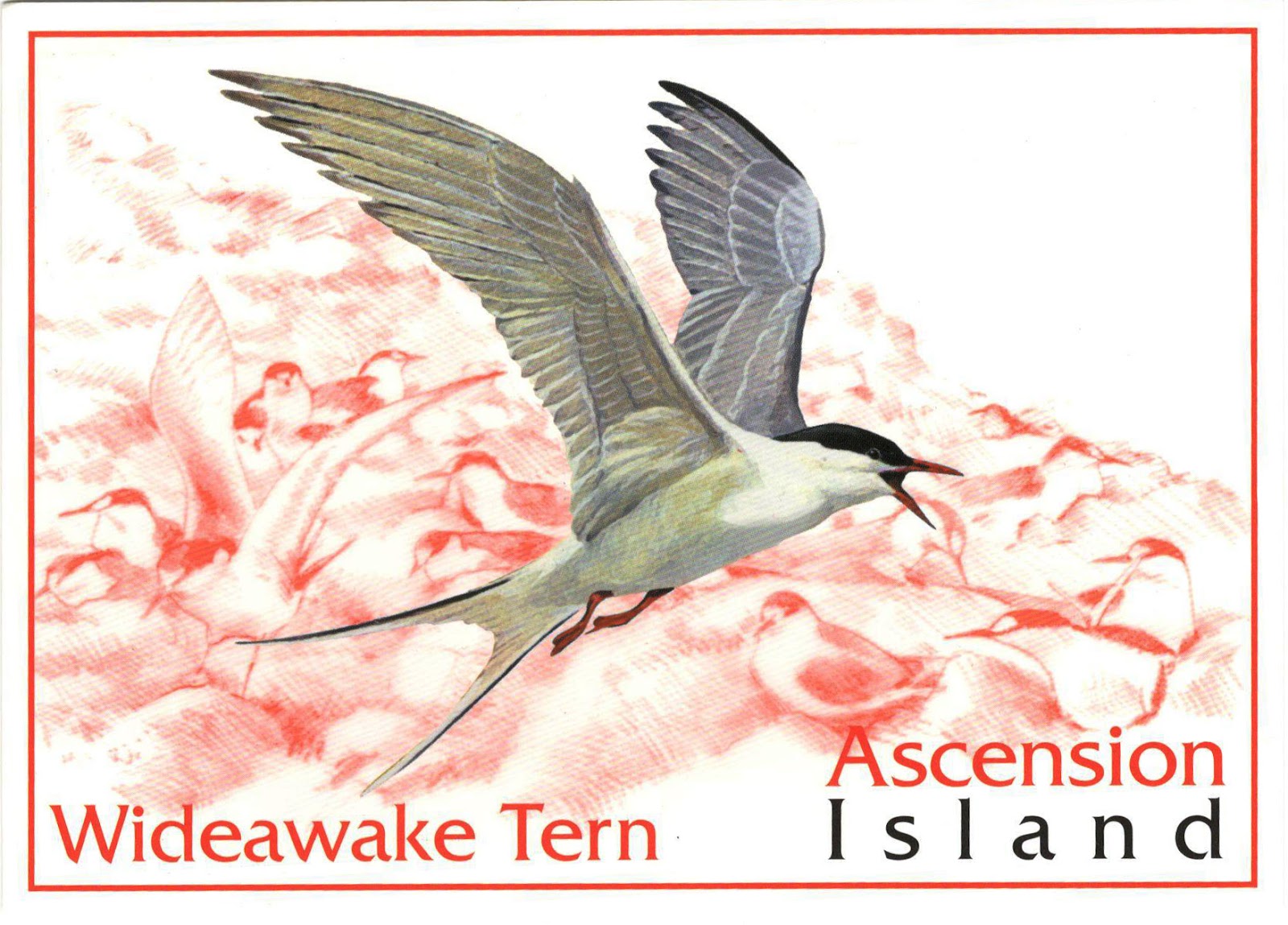
1889 UNITED KINGDOM (Saint Helena, Ascension and Tristan da Cunha) - Wideawake Tern in Ascension Island
Located in the equatorial waters of the South Atlantic Ocean, at around 1,600km from the coast of Africa and 2,250km from the coast of Brazil, the isolated Ascension Island is governed as part of the British Overseas Territory of Saint Helena, Ascension and Tristan da Cunha. A volcanic peak rising from only 100km west of the Mid-Atlantic Ridge, much of the island is a wasteland of lava flows and cinder cones, inhabited by 880 people.
Etichete:
ASCENSION ISLAND,
Fauna,
SAINT HELENA AND ASCENSION AND TRISTAN DA CUNHA,
UNITED KINGDOM,
UNITED KINGDOM (Overseas Territories)
Locaţia:
Ascension Island, Sf. Elena
September 11, 2015
1888 RUSSIA (Republic of Buryatia) - A little Buryat dancer
With a population of about 500,000, the Buryats, the major northern subgroup of the Mongols, are the largest indigenous group in Siberia, mainly concentrated in their homeland, the Buryat Republic, but also in Mongolia, and in China. They share many customs with other Mongols, including nomadic herding, and erecting gers for shelter. After the Russian Revolution the Buryat’s open-pasture pastoralism was replaced by collective-farm cattle breeding.
Etichete:
AS - ASIA,
AS-Russia,
RUSSIA,
RUSSIA (Republic of Buryatia)
Locaţia:
Buriatia, Rusia
September 9, 2015
1882 UNITED STATES (Mississippi) - Mississippi map and flag
Placed on the eastern bank of Mississippi River, and bordered by Louisiana, Arkansas, Tennessee, Alabama, and Gulf of Mexico, the state of Mississippi is entirely composed of lowlands, the highest point being Woodall Mountain, in the foothills of the Cumberland Mountains, 246m above sea level. Most of it is part of the East Gulf Coastal Plain, and the coastal plain is generally composed of low hills, such as the Pine Hills in the south and the North Central Hills. The Pontotoc Ridge and the Fall Line Hills in the northeast have somewhat higher elevations.
September 8, 2015
1881 FRANCE - Two children
I believe that this is an advertising postcard, issued by La Redoute, a French mail order company, a multi-line retailer specializing in ready to wear apparel and home decor. It is the 2nd largest seller of women's apparel and the 3rd largest seller of linens in France. The company operates in 26 countries and has more than 10 million active customers. La Redoute was founded in 1837 when Joseph Pollet, son of a rural family, moved to the capital of the French wool region, Roubaix.
Etichete:
EU - EUROPE,
EU-France,
FRANCE
Locaţia:
Franţa
1880 UNITED STATES (Ohio) - Bierberg Bakery in Columbus
Named for explorer Christopher Columbus, Columbus was founded in 1812 at the confluence of the Scioto and Olentangy rivers, and assumed the functions of state capital in 1816. The National Road reached Columbus from Baltimore in 1831 facilitated a population boom. A wave of immigrants from Europe resulted in the establishment of two ethnic enclaves on the outskirts of the city. A significant Irish population settled in the north along Naghten Street, while the Germans took advantage of the cheap land to the south, creating a community that came to be known as the Das Alte Südende (The Old South End), now known as German Village.
Etichete:
UNITED STATES,
UNITED STATES (Ohio)
1879 JORDAN - Black iris, Jordan's national flower
Black iris (Iris nigricans), a flowering plant in the family Iridaceae which needs direct sun and sharp drainage, is the national flower of Jordan and can be found all across the country, particularly in the Karak Governorate. Actually it is endemic to Jordan and is an endangered species. It blooms in the spring with dark black petals and is a symbol of growth, renewal and change.
The postcard is special because has, as you can see, a typographical error, respectively on front is written "PLACK IRIS" instead of "BLACK IRIS".
Etichete:
JORDAN,
Plants,
Typographical error
Locaţia:
Iordania
September 6, 2015
1878 MEXICO - The Tlacolula Market
Located at about 30 km from the center of the city of Oaxaca, Tlacolula de Matamoros is the main commercial center for the Tlacolula Valley area, and best known for its weekly open air market (or tianguis) held on Sundays. This market is one of the oldest, largest and busiest in Oaxaca, mostly selling foodstuffs and other necessities for the many rural people which come into town on this day to buy, sell and socialize. The name most likely comes from the Nahuatl phrase Tlacolullan, which means "place of abundance."
Etichete:
AM - AMERICAS,
AM-Mexico,
MEXICO
Locaţia:
Tlacolula de Matamoros, Oax., Mexic
September 5, 2015
1877 UNITED STATES (Arizona) - Mission San Xavier del Bac in Tucson
Located about 16km south of downtown Tucson, on the Tohono O'odham San Xavier Indian Reservation, Mission San Xavier del Bac is a historic Spanish Catholic mission, founded in 1692 and named for a pioneering Christian missionary and co-founder of the Society of Jesus (Jesuit Order), Francis Xavier. In 1700 construction began on a church at a site nearby the current Mission. It served the community until razed by Apaches in 1770. Today's Mission was built between 1783-1797 and is widely considered to be the finest example of Spanish Colonial architecture in the United States.
1876 ITALY (Sicily) - Syracuse & the Rocky Necropolis of Pantalica (UNESCO WHS)
![]() |
| 1876 Syracuse - 1. Fountain of Diana; 2. The Cathedral; 3. Palazzo Beneventano del Bosco. |
This site, designated an UNESCO WHS in 2005, consists of two separate elements: the Necropolis of Pantalica (which contains over 5,000 tombs cut into the rock, most of them dating from the 13th to 7th centuries BC), and the ancient Syracuse, which includes the nucleus of the city’s foundation as Ortygia by Greeks from Corinth in the 8th century BC. The site of the city, which Cicero described as ‘the greatest Greek city and the most beautiful of all’, retains vestiges such as the Temple of Athena (5th century BC, later transformed to serve as a cathedral), a Greek theatre, a Roman amphitheatre, a fort and more.
Etichete:
Fountains,
ITALY,
ITALY (Sicily),
Palaces / Castles / Fortress,
Places of worship,
Received from Ana,
UNESCO World Heritage Sites
Locaţia:
Siracuza, Provincia Siracuza, Italia
September 4, 2015
1874 UNITED KINGDOM (Turks and Caicos Islands) - Salt Raking at Salt Cay
Salt Cay is a tiny, flat, triangular island, with an area of only 6.7 sq km and a population of less than 100. Around 1673, British Colonials from Bermuda saw the potential of the shallow and landlocked ponds on many of the islands in the Turks and Caicos, including Salt Cay. At the time, salt was a valuable essential used for food preservation and commanded a high price. Although the early visitors simply raked the naturally-occurring salt, it became obvious that production could be increased and the complex system of divided ponds, gates, channels and pumps was born.
1873 SUDAN - Souq Omdurman
Etichete:
AF - AFRICA,
AF-Sudan,
SUDAN
Locaţia:
Omdurman, Sudan
September 3, 2015
1872 UNITED KINGDOM (British Virgin Islands) - Marina Cay
The British Virgin Islands consist of four main islands, along with over fifty other smaller islands and cays. One of this cay is Marina Cay, an 8-acre island which is home to Pusser's Restaurant and Villa Rentals. It was uninhabited until 1937, when author Robb White and newly married wife Rosalie "Rodie" Mason settled on the island. The Whites spent three years on Marina, hacking a cistern out of the rough, rocky land and shipping in enough concrete to build a small, sturdy house.
1871 GUERNSEY (Herm) - Herm Island
Located between the islands of Guernsey and Sark, Herm is 2.4km long and under 0.80km wide; orientated north-south. The first settlers arrived in the Neolithic and Bronze Ages. Many tombs from that period remain today, the majority in the north of the island. It was annexed to the Duchy of Normandy in 933, but returned to the English Crown in 1204. It was occupied by Germany in WWII and the scene of Operation Huckaback. Now it has 60 inhabitants.
Etichete:
BRITISH CROWN DEPENDENCIES,
GUERNSEY
Locaţia:
Herm, Guernsey
September 2, 2015
1870 CANADA (Alberta / Northwest Territories) - Stars and Aurora Borealis in Buffalo National Park
Located in northeastern Alberta and southern Northwest Territories, Wood Buffalo National Park is the second-largest national park in the world (after Northeast Greenland National Park), an UNESCO World Heritage Site since 1983, but also the world's largest dark sky preserve. A dark sky preserve is an area, usually surrounding a park or observatory, that is kept free of artificial light pollution.
Etichete:
Aurora,
CANADA,
CANADA (Alberta),
CANADA (Northwest Territories),
Night views
Locaţia:
Canada
0310, 0472, 0473, 1869 ROMANIA (Vâlcea) - Monastery of Horezu (UNESCO WHS)
![]() |
| 0310 Monastery of Horezu - The Church of Saints Constantine and His mother Helena (1) |
Posted on 15.08.2012, 16.01.2013, 02.09.2015
On 15/26 August 1714, when Romanians, as Orthodox Christians, celebrated Sântamaria Mare, or Adormirea Maicii Domnului (Dormition of the Theotokos, literally "Falling asleep of the God's Mother"), Constantin Brâncoveanu, former Prince of Wallachia, mazilit (deposed) and arrested by Ottomans few months ago, near Easter, was beheaded at Istanbul by order of sultan Ahmed III, together with all his four sons and his son-in-law and trusted counselor, Ienache Văcărescu, being accused that "gathered immense fortune and weapons to oppose and prepare an uprising." His death, followed by that of Ştefan Cantacuzino, also beheaded two years later, together with his father, Constantin Cantacuzino, marked the beginning of the Phanariote Epoch in Wallachia and Moldavia (the replacing of the local princes with rulers coming from the Istanbul's neighborhood named Fener, appointed by High Porte), a century of plunder and oppression that will not find equal than in the period following WWII.
![]() |
| 1869 Monastery of Horezu - The Church of Saints Constantine and His mother Helena (2) |
"Among the voivodes of Wallachia, none cherished and supported the culture as Brâncoveanu" wrote historian Constantin C. Giurescu in History of romanians. In his long reign (26 years) have taken a number of educational, literary, scientific and architectural initiatives, Brâncovenesc style of the buildings being the well known testimony of the remarkable cultural flowering that met Wallachia in that period. Located in the middle of a picturesque depression of Southern Carpathians, Hurezi Monastery (also known as the monastery of Horezu), "a synthesis of art and skill of the Romanian people until that time", is the most representative foundation of Brâncoveanu, and also the most important monastic site of Wallachia. Begun in 1690, "in the second year of our reign", as even the prince say, the building of the monastery, with painting, additions and various chapels, lasted until 1705, but essence was completed in 1697.
![]() |
| 0472 Monastery of Horezu - The Infirmary and its church |
The ensemble includes the proper monastery, the church of infirmary (Biserica Bolniţei), the Hermitage of the Saints Apostles (Schitul Sfinţii Apostoli), about 50m to the north (founded by the great starets Ioan Arhimandritul in 1698 and painted by Iosif and Ioan in 1700), and the Hermitage Saint Stephen (Schitul Sfântul Ştefan), named after the eldest son of prince (built in 1703 and painted by Ianache, Istrate and Harinte).Hurezi monastery has two enclosures. In the first, outer, bounded by walls of brick, is the first gate and a building with floor. The second enclosure is rectangular, closed on three sides by buildings with floor, and on the fourth with a high wall. In the middle of the enclosure is the main church, having as patron saints Sfinţii Împăraţi (the Saints Emperors, Constantine and Elena). It's a simplified interpretation of the Episcopal Church of Curtea de Argeş.
![]() |
| 0473 Monastery of Horezu - The relics of 11 Holy Martyrs |
The ensamble of infirmary, seated, as were the rules, outside the walls of the monastery, consists of a pavilion, the monks cells, that are today in ruins, and the church erected in the center. The church, which is dedicated to the Assumption of Mary, was founded by Doamna Maria, the wife of Constantin Brâncoveanu, and by the supervision of works took care even the abbot, the Archimandrite Ioan. Works started in 1696 and ended in 1699 with the painting of the church by the craftsmen listed above the entrance door: Preda, Nicolae and Efrem. The church has no narthex, having only altar, nave and porch. In a reliquary in the monastery are little parts of the relics of the Saints: Andrew the Apostle, Panteleon, Mercurie, Mina, Fevronia, Haralambie, Procopie, Teodor Tiron and Minodora; a second reliquary contain little parts of the relics of the Saints: Philip the Apostle, Martyr Marina şi Hierarch Mihail.
September 1, 2015
1868 UNITED STATES (Florida) - Lightner Museum in St. Augustine
![]() |
Founded in 1565 by Spanish admiral and Florida's first governor, Pedro Menéndez de Avilés, St. Augustine is the oldest continuously occupied European-established settlement in the continental United States. Among the points of interest of the city is Lightner Museum, a museum of antiquities, mostly American Gilded Age pieces, housed within the historic Hotel Alcazar. This 1887 Spanish Renaissance Revival style building was commissioned by Henry M. Flagler to appeal to wealthy tourists who traveled south for the winter on his railroad, the Florida East Coast Railway.
Etichete:
Fountains,
UNITED STATES,
UNITED STATES (Florida)
1867 RUSSIA (Republic of Tatarstan) - TatNeft Arena in Kazan
Located at the confluence of the Volga and Kazanka Rivers, Kazan is the capital and largest city of the Republic of Tatarstan, and also one of the largest industrial and financial centers of Russia. TatNeft Arena is an indoor sporting arena with a capacity of 10,000, opened in 2005. The arena is home to Ak Bars Kazan of the Kontinental Hockey League.
Etichete:
RUSSIA,
RUSSIA (Republic of Tatarstan),
Sports Venues
1866 GERMANY (North Rhine-Westphalia) - A facade of an old building from Gelsenkirchen
Gelsenkirchen was first documented in 1150, but it remained a tiny village until the 19th century, when the Industrial Revolution led to the growth of the entire area. In 1840, when the mining of coal began, 6,000 inhabitants lived in Gelsenkirchen; in 1900 the population had increased to 138,000. Actually in the early 20th century it was the most important coal mining town in Europe. And even if three quarters of the city was destroyed during the bombings of WWII, some buildings reminding of its peak survived until today, how is the one shown in the image, with a neoclassical facade.
Etichete:
GERMANY,
GERMANY (North Rhine-Westphalia)
Locaţia:
Gelsenkirchen, Germania
1865 ROMANIA (Tulcea) - The Danube Delta Traditions
As might be expected, the main occupation of the inhabitants of the Danube Delta, be they Romanians, Lipovans or Hahols (Ukrainians - descendents of Zaporozhian Cossacks), is fishing, which provides the main source of food and income. However is not neglected the animal breeding (mainly pigs and cows), which is made there in a special way: the animals are let loose on the grinduri (oblong strip of land formed from alluvial deposits), where they seeks the food.
Etichete:
EU - EUROPE,
EU-Romania,
Fauna,
ROMANIA,
ROMANIA (Tulcea),
Watercrafts
Locaţia:
Crișan 827060, România
Subscribe to:
Posts (Atom)