October 8, 2013

0830 VIETNAM (Red River Delta) - Khám Thiên Street in Hanoi during rush hours


In 2010, when officially marked 1000 years since the establishment, Hanoi ("Between Rivers" or "River Interior") exceeded six and a half million of inhabitants, being the second largest city in Vietnam, after Ho Chi Minh City (Saigon). Besides, from 1010 until 1802 it was the most important political centre of the country, from 1802 until 1945 imperial capital, from 1954 until 1976 the capital of North Vietnam, and since 1976 is the capital of a reunified Vietnam.

October 7, 2013

0827-0829 TURKEY (Aegean Region) - Ephesus (UNESCO WHS)

0827 Ephesus - The Library of Celsus

Founded as an Attic-Ionian colony in the 10th century BC, on the site of the Bronze Age city Apasa, Ephesus was famed for the Temple of Artemis (completed around 550 BC), one of the Seven Wonders of the Ancient World. Around the year 650 BC it was conquered by the Lydians, and in the middle of the 6th century BC was incorporated into the Achaemenid Empire, but in 479 BC the Ionians, together with Athens, overthrew the Persians. In 356 BC the temple was burned down, according to legend, by a lunatic, being restored by inhabitants.

0828 Ephesus - Hadrian Temple
 

A few decades after Alexander the Great liberated the city, the river Cayster silted up the harbor and the inhabitants were forced to move to a new settlement, 2km further on. In the next period Ephesus became part of the Seleucid Empire, then came under Egyptian rule, and finally under the one of the king of Pergamon, later being one of the largest cities of Roman Asia Minor. The city and temple were destroyed by the Goths in 263 AD, and this marked the decline of its splendor.

0829 Ephesus - Heracles Gate

Rebuilt by Constantine I, it remained the most important city of the Byzantine Empire in Asia after Constantinople in the 5th and 6th centuries, till was again partially destroyed by an earthquake in 614. Its importance declined when the harbor was silted up (today, it is 5km inland). Sacked by the Arabs several times, and conquered by Seljuk Turks in 1090, it returned in 1097 under the control of Byzantine Empire, which kept it until 1308. Incorporated into the Ottoman Empire for the first time in 1390, and for the second in 1425, it was completely abandoned in the 15th century. Nearby Ayasuluğ was renamed Selçuk in 1914.

Entrance ticket to Ephesus (2013)
Entrance ticket for children (free) to Ephesus (2013)

Built in honor of the Tiberius Julius Celsus Polemaeanus, an Ancient Greek who served as governor of Roman Asia (105-107) in the Roman Empire, Library of Celsus was completed in 135 AD by Celsus' son, consul Gaius Julius Aquila. Celsus paid for the construction of the library with his own personal wealth, and is buried in a sarcophagus beneath it. It once held nearly 12,000 scrolls. The interior of the library and all its books were destroyed by fire in the devastating earthquake that struck the city in 262.

October 6, 2013

0826 ECUADOR - Tungurahua - part of Sangay National Park (UNESCO WHS)


The stratovolcano Tungurahua (from Quichua tunguri - throat, and rahua - fire), located in the Cordillera Oriental of the Andes of central Ecuador, 140km south of Quito, has restarted its activity on August 19, 1999, and is ongoing as of 2013, with several major eruptions since that period, the last starting on 15 July 2013. With its elevation of 5,023 m, Tungurahua just over tops the snow line, so its top is snow covered and did feature a small summit. Its eruptions are strombolian, accompanied by strong explosions, pyroclastic flows and sometimes lava flows.

October 5, 2013

0381, 0825 AUSTRALIA (Queensland) - Great Barrier Reef (UNESCO WHS)

Australia
0381  Great Barrier Reef  Australia (1)

Located in the Coral Sea, off the coast of Queensland, the Great Barrier Reef is composed of over 2,900 individual reefs and 900 islands, stretching for over 2,600 km and over an area of approximately 344,400 square kilometres, and can be seen from outer space. Therefore it is not only the largest coral reef ecosystem on earth, but also the world's biggest single structure made by living organisms. The first recorded discovery of the reef by europeans occurred when James Cook crashed into it in 1770.

Australia
0825  Great Barrier Reef  Australia (2)

Cook's quick-thinking crew was able to repair the ship and sail on, but in the coming decades the reef has caused many shipwrecks, until it was mapped in th­e 1800s. Now, a large part of The Great Barrier Reef is protected by the Great Barrier Reef Marine Park (the largest marine protected area in the world), and since 1981 was designated a World Heritage Site by UNESCO. The Great Barrier Reef supports a diversity of life, including many vulnerable or endangered species, some of which may be endemic to the reef system.

0824 FRANCE (Brittany) - Saint-Malo


Once a feared base of corsairs, French privateers and even pirates, heavily fortified against Norman (or English) attack, Saint-Malo, located at the mouth of the Rance River, and controlling not only the estuary, but the open sea beyond, is today one of the top tourist draws in Brittany. The star of the show is the atmospheric walled city (intramuros), largely destroyed in the WWII but painstakingly reconstructed.

The promontory fort of Aleth, placed in what is now the Saint-Servan district, commanded approaches to the Rance even before the Romans, but modern Saint-Malo traces its origins to a monastic settlement founded by Saint Aaron and Saint Brendan early in the 6th century. Its name is derived from a Welsh monk, probably a follower of Brendan, Saint Malo or Maclou. The corsairs of Saint-Malo not only forced English ships passing up the Channel to pay tribute, but also brought wealth from further afield. Jacques Cartier, who is thus credited as the discoverer of Canada, lived in and sailed from Saint-Malo, as did the first colonists to settle the Falklands.

0823 CHINA (Anhui) - Ancient Villages in Southern Anhui - Xidi and Hongcun (UNESCO WHS)


The traditional non-urban settlements of China, large extent disappeared during the 20th century, are well preserved in the villages of Xidi and Hongcun, illustrations of a type of feudal settlement based on a prosperous trading economy. First built during the Huangyou era (1049-1053) of Song Dynasty Emperor Renzong, the village Xidi was originally called Xichuan (West River). The rise of the village was closely tied to the fortunes of the Hu family. By 1465, during the Ming Dynasty (1368–1644), family members had started in business as merchants, leading to construction of major private buildings and a public infrastructure. By the middle of the 17th century, the influence wielded by members of the Hu family expanded from commerce into politics, Xidi peaking the maximum of prosperity in the 18th and 19th centuries, at which time the village comprised about 600 residences.

October 3, 2013

0822 CROATIA (Dubrovnik-Neretva) - The historic town of Korčula (UNESCO WHS - Tentative List)


The legend say that Korčula, from the central Dalmatian archipelago, separated from the mainland only by a narrow strait, was founded by Trojan hero Antenor in the 12th century BC, but the archaeologists have found there settlements dating back since Mesolithic. Inhabited by Illyrians, but also by Greeks colonists, the island was subsequent conquered by Romans, and in the 6th century AD it came under Byzantine rule. The Great Migrations brought Slavic and Avar invasions, and finally the Croats seized control of the area. A time Venetian merchants paid tribute to the Neretvian pirates, but in 998 the neighbour Principality of Pagania came under Venetian control.

October 1, 2013

0821 BRAZIL (Paraná) - Curitiba, the Model City


Capital of the Brazilian state of Paraná, Curitiba is the largest city in the prosperous Southern region, and also a cultural, political, and economic center. Founded in 1693 by the Portuguese on a plateau at 932m above sea level, at 105 km west of the sea port of Paranaguá, between cattle-breeding country and marketplaces, the town has developed quite quickly. Between 1850 and 1950, it grew due to logging and agricultural expansion in the Paraná State, and the waves of European immigrants (mainly Germans, Italians, Poles, Russians and Ukrainians) contributed to its economic and cultural development.

0820 VIETNAM (Southeast) - Saigon Central Post Office


Former capital of the French colony of Cochinchina and later of the independent republic of South Vietnam, Saigon is officially called Ho Chi Minh City (after Hồ Chí Minh, the late North Vietnamese leader) for nearly 30 years, ie since 1976, but the old name is more often used than the new one not only in everyday speech, but also by the authorities. A good example is that on the postmark write Saigon, no Ho Chi Minh. Moreover, the inhabitants of the city weren't named ever otherwise than Saigonese. It seems that in this case, either the mercantilism, or the desire to preserve the tradition defeated the ideology.

September 30, 2013

0819 FINLAND (Southwest Finland) - Archangel Michael's church in Turku


In 1894, when won the competition for the building of this church, Lars Sonck only just graduated from Helsinki Polytechnic Institute, and had long time to become one of the prominent figures of National Romanticism. Archangel Michael's church is a distinguished example of the neogothic style, built of red brick, with a roof made of grey green slate from Norway. It is a long church with three aisles, galleries and a multifaceted choir. In addition to the main entrance there are also doors at each corner of the church. The main spire rises to a height of 77 meters from the foundations.

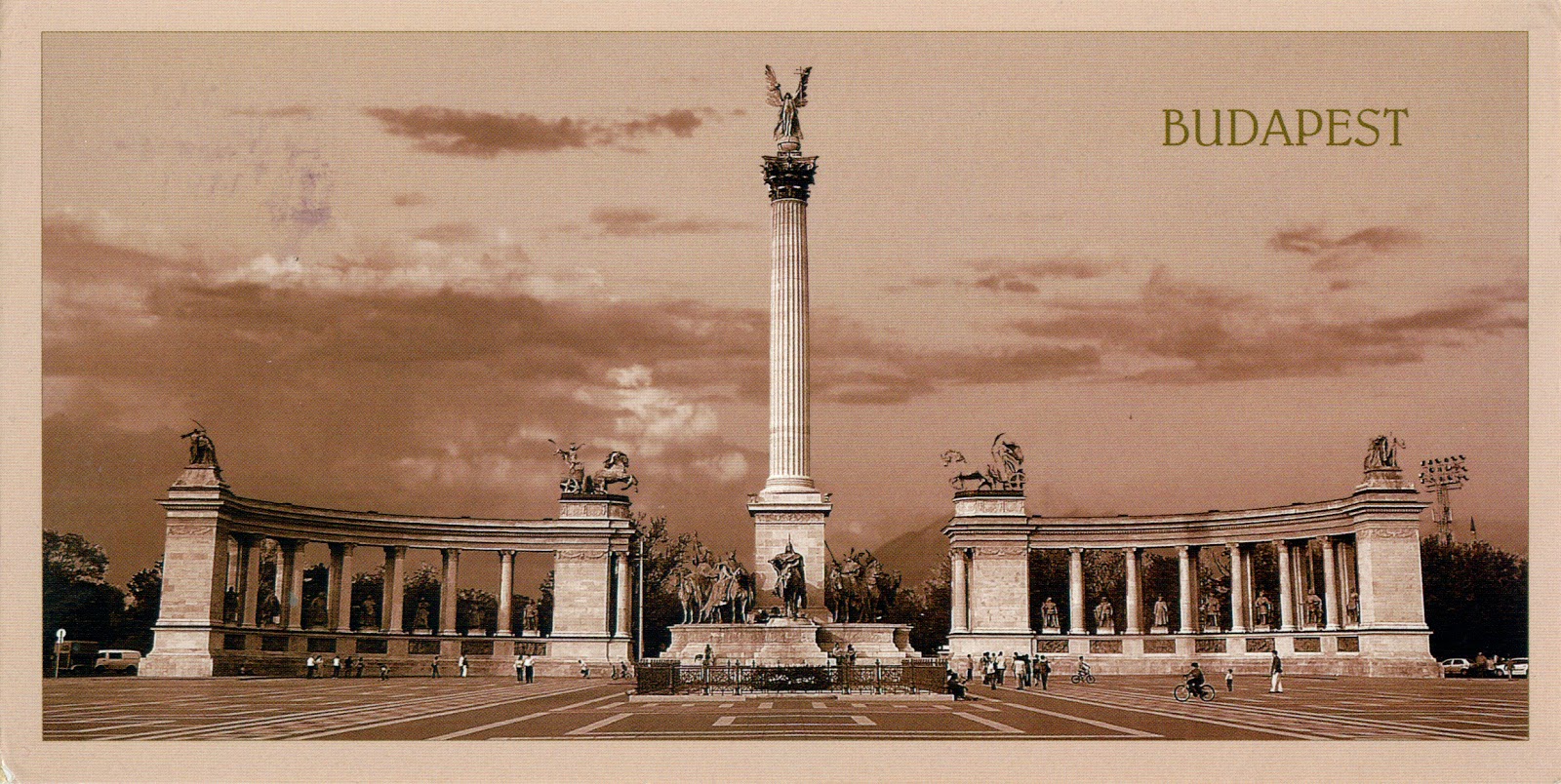
0454 HUNGARY (Budapest) - Heroes' Square - part of Budapest, including the Banks of the Danube, the Buda Castle Quarter and Andrássy Avenue (UNESCO WHS)

0454  Heroes' Square in Budapest

Located at the end of Andrássy Avenue, next to City Park, Heroes' Square (Hősök tere) is one of the major squares of Budapest, rich with historic and political connotations. The central site of the square is the Millennium Memorial, with statues of the leaders of the seven tribes that founded Hungary in the 9th century (Árpád, Előd, Ond, Kond, Tas, Huba, and Töhötöm) and other outstanding figures of Hungarian history (on the left colonnade - Stephen I, Ladislaus I, Coloman, Andrew II, Béla IV, Charles I, Louis I; on the right colonnade - John Hunyadi, Matthias Corvinus, István Bocskay, Gabriel Bethlen, Imre Thököly, Francis II Rákóczi, Lajos Kossuth).

September 25, 2013

0817 UZBEKISTAN (Tashkent) - Navoi Theatre in Tashkent


The Navoi Theatre (Alisher Navoi State Academic Bolshoi Theatre) in Tashkent, one of the only 3 theatres that were given the status of Grand in the erstwhile Soviet Union, is also one of the leading centers of performing arts in Central Asia. Designed by the acclaimed architect Alexey Shchusev (who also built a mausoleum in Red Square in Moscow), it was named after Alisher Navoi (1441-1501), "the founder of Uzbek literature", and even "the founder of early Turkic literature".

0816 NEW ZEALAND (South Island) - Church of the Good Shepherd


Situated on the shores of Lake Tekapo, in the South Island of New Zealand, amongst the natural beauty of the lake and the mountains, the Church of the Good Shepherd was the first church built in the Mackenzie Basin. The foundation stone was laid by H.R.H. the Duke of Gloucester, on January 15th, 1935, and the completed church was dedicated by the Bishop of Christchurch on August 3rd, 1935. Designed by Christchurch architect R.S.D. Harman (1896-1953), and based on sketches by a local artist, Esther Hope (1885-1975), it is arguably one of the most photographed in New Zealand, and features an altar window that frames stunning views of the lake and mountains.

September 24, 2013

0815 GUATEMALA - Mayan weavers


As also in the south of Mexico, in Guatemala the tapestry of traditional textiles is even today a prominent feature in the indigenous Mayan communities. Since pre-Colombian times, women have hand-spun and hand-woven their families' traje (clothing) using the age-old back-strap loom. According to the Ancient Mayan Quiche (Kee-Chay) tradition, Ixchel, the female moon goddess has been weaving in this method since the beginning of time. In the back-strap loom, the tejedoras (weaver) physically creates the necessary tension to weave strands of dyed-cotton through the suspended threads. Using this loom, women throughout the Western highlands of Guatemala create the fabric panels that compose their intricate traditional clothing, including huipiles (blouses), tzutes (head wraps) and fajas (fabric belts).

Huipil (from the Nahuatl word huīpīlli) is the most common traditional garment worn by indigenous women from central Mexico to Central America. It is a loose-fitting tunic, generally made from two or three rectangular pieces of fabric which are then joined together with stitching, ribbons or fabric strips, which an opening for the head and if the sides are sewn, opening for the arms. Lengths of the huipil can vary from a short blouse-like garment or long enough to reach the floor.


Each region in the Western Highlands of Guatemala exhibits a distinct weaving pattern, color palette, and material composition. Much like a national flag, women wear their traditional traje as a proud representation of their hometown roots despite the fabric’s historical connection to the Spanish conquest. It is widely explained that colonial officials forced each community to wear a certain color and pattern to help in tax collection practices. Furthermore, these community-specific fabrics were used by the central government during the Guatemalan Civil War (1960-1996) to target specific indigenous communities. Rebel-sympathizing villagers throughout the Quiche region were targeted by the Ríos Montt regime. As a result, many women were forced to hide their traditional traje or exchange their huipiles for those of a neighboring region. However the Mayan women survived and  their weaving continued.

0814 INDONESIA (Sulawesi) - A Torajan with a tedong bonga


I wrote about Toraja and their special houses here, but I didn't say anything about the importance of water buffalo in their society, in lives, but also in death. In lives, wealth is counted by the ownership of water buffaloes. Together with pigs, buffaloes are the main animals in Toraja’s culture to be sacrificed in every ceremony, especially in Rambu Solo or Toraja’s funeral ceremony and Rambu Tuka or its thanksgiving ceremony. As a special animal, buffaloes in Toraja can be extremely expensive. One big "white” buffalo can be priced to tens of millions rupiah. In the postcard is a tedong bonga, a local variety, with a unique black and white colouration.

September 22, 2013

0812 CHINA (Jiangsu) - Zhouzhuang, the Venice of China


Located 30 km southeast of the city of Suzhou, Zhouzhuang, China's oldest water town, known as Zhenfang Lane in ancient times, is noted for its profound cultural background, the well preserved ancient residential houses and the elegant watery views. Called Yaocheng in the Spring and Autumn Period (770-476 BC), it was part of the King of Wu, and in the mid of Yuan Dynasty (1271-1368) became a distribution center of food, silk, ceramics, arts and crafts in the south of China.

September 20, 2013

0666, 0810, 0811 GREECE (Attica) - Acropolis of Athens (UNESCO WHS)


Posted on 03.06.2013 and completed on 20.09.2013
When we say Acropolis, our thoughts immediately fly to Athens, although there are many other acropoleis in Greece, the term being a general one, which designate a citadel built upon an area of elevated ground with a defensive purpose. The fact is that the Acropolis of Athens had such a significance in history, that it's commonly known as "The Acropolis" without qualification. So I will use it myself in this way. Located on a flat-topped rock that rises 150m above sea level, the Acropolis was inhabited as far back as the fourth millennium BC. In the Mycenaean era was built a massive wall around the hill, which will serve as the main defense until the 5th century and will shelter the main religious buildings of Athens. Totally destroyed by the Persians during the Greco-Persian Wars, Acropolis was rebuilt during the Golden Age of Athens (460–430 BC), under the leadership of Pericles, and in the near future. Since then dates all its major buildings, to the construction of which participated famous architects as Ictinus, Callicrates and Mnesicles, and the great sculptor Phidias.


The Parthenon (the tallest building in the first two postcards), a temple dedicated to the maiden goddess Athena, built between 447 and 432 BC, is the most important surviving building of Classical Greece, generally considered the culmination of the development of the Doric order. It is regarded also as an enduring symbol of Ancient Greece, Athenian democracy, western civilization and one of the world's greatest cultural monuments. The Parthenon was built under the general supervision of the artist Phidias, the architects being Ictinus and Callicrates. The funds were partly drawn from the treasury of the Delian League, which was moved from the Panhellenic sanctuary at Delos to the Acropolis in 454 BC. Some studies conclude that many of its proportions approximate the golden ratio. The most characteristic feature in the architecture and decoration of the temple is the Ionic frieze running around the exterior walls of the cella, which is the inside structure of the Parthenon.


Another magnificent building is the Erechtheion, an temple built between 421 and 406 BC by Mnesicles, the sculptor and mason of the structure being Phidias. Its eastern part was dedicated to Athena Polias, while the western part served the cult of Poseidon-Erechtheus and held the altars of Hephaestus and Voutos, brothers of Erechtheus. It was built of marble from Mount Pentelikon, with friezes of black limestone from Eleusis. It had elaborately carved doorways and windows, and its columns were ornately decorated and painted, gilded and highlighted with gilt bronze and multi-colored inset glass beads. On the north side, there is a large porch with six Ionic columns, and on the south, the famous "Porch of the Maidens", with six draped female figures (caryatids) as supporting columns (in the third postcard). Although of the same height and build, and similarly attired and coiffed, the six Caryatids are not the same: their faces, stance, draping, and hair are carved separately; the three on the left stand on their right knee, while the three on the right stand on their left knee. 

Because Acropolis of Athens and its monuments "are universal symbols of the classical spirit and civilization and form the greatest architectural and artistic complex bequeathed by Greek Antiquity to the world", it was designated an UNESCO WHS in 1987.

0809 SPAIN (Catalonia) - Park Güell - part of Works of Antoni Gaudí (UNESCO WHS)


Built betwen 1900 and 1914, after Gaudí's plans, on the hill of El Carmel in the Gràcia district of Barcelona, Park Güell is even today one of the largest architectural works in south Europe. Inspired by the English garden city movement it was originally part of a commercially unsuccessful housing site, which included a large country house (Larrard House or Muntaner de Dalt House), next to a neighborhood of upper class houses called La Salut (The Health). Park Güell is the reflection of Gaudí’s artistic plenitude, which belongs to his naturalist phase (first decade of the 20th century).