Showing posts with label ROMANIA. Show all posts

March 1, 2020

3442 ROMANIA (Maramureş) - Life in the countryside

Romania - Maramures

In recent years, I have met more and more people, both in social networks and in reality, who claim to envy those living in the country, in the bosom of nature. For the overwhelming majority of them, this is either hypocrisy or simply a lie, because I am convinced that lacking the comfort of the city would leave life in the countryside in a few days. In these isolated villages, where the water does not come from the tap and the heat from a button, where autumn you swim in the mud and winter in the snow, where you have to grow vegetables and animals if you want to eat, life is not at all bucolic.

February 21, 2020

3429 ROMANIA - The Dacians


The Dacians were a Thracian people who were the ancient inhabitants of the cultural region of Dacia, located in the area near the Carpathian Mountains and west of the Black Sea. In the absence of historical records written by the Dacians (and Thracians) themselves, analysis of their origins depends largely on the remains of material culture. From roughly 500 BC, the Dacians developed a distinct civilization, which was capable of supporting large centralised kingdoms by 1st BC and 1st AD.

February 14, 2020

3425 ROMANIA (Bucharest) - Postcrossing Meetup, Bucharest, 2 February 2020


Because February 2, 2020 was a palindrome day, the Romanian postcrossers decided to meet, and Mihnea Răducu chose for the postcard published on this occasion, a symmetrical building, CEC Palace. Built in eclectic style in 1900 as a new headquarters for Romania's oldest bank, the public savings institution Casa de Depuneri, Consemnațiuni și Economie, later known as C.E.C. and nowadays CEC Bank, the palace is topped by a glass and metal dome. The entrance features an arch supported by two pairs of columns in composite style. The four corners are decorated with gables and coats of arms and ending in Renaissance domes.

February 9, 2020

3423 ROMANIA (Sibiu) - Cârța Monastery


The Cârța Monastery is a former Cistercian (Benedictine) monastery in the Țara Făgărașului region in southern Transylvania in Romania, currently an Evangelical Lutheran church belonging to the local Saxon community. It lies on the left bank of the Olt River, between the cities of Sibiu and Făgăraș, and was probably founded in 1202-1206 by monks from Igriș Abbey (daughter house of Pontigny Abbey), being disbanded in 1494, when the apostolic legate Ursus of Ursinis ratified Cârța Abbey's attachment to the Provostship nullius of Sibiu.

January 30, 2020

3407 ROMANIA - Puzzle map of Romania - series of postcards

3407 The summary of the series
"100 years since the Great Union of Romania"

At the initiative of Mihnea Răducu, between 1st December 2017 and 1st December 2018, so in the year in which the Romanians celebrated the centenary of the Great Union, took place every month a meeting of the Romanian postcrossers, and at each meeting has been edited a postcard to recall this exceptional event for the Romanians. 
  
The all 12 postcards of the series
"100 years since the Great Union of Romania"

Moreover, each postcard contains a fragment from the outline of the borders of Romania and a letter, such that if you put together all the 12, you make on one side the map of Romania and on the other side the word "Postcrossing". Finally, Mihnea edited a postcard to solve this puzzle (3407). The 12 postcards can be seen here: 

P - Second Train Postcrossing Meetup, 24 February 2018
O - Postcrossing Meetup, Cornu, 15 September 2018
S - Postcrossing Meetup, Iaşi, 24 March 2018
T - Postcrossing Meetup, Chișinău, 23 June 2018
C - Postcrossing Meetup, Bucharest, 20 January 2018
R - Postcrossing Meetup, Bucharest, 2 December 2017
O - Postcrossing Meetup, Bucharest, 14 July 2018
S - Postcrossing Meetup, Bucharest, 17 June 2018
S - Postcrossing Meetup, Curtea de Argeş, 11 November 2018
I - Postcrossing Meetup, Bucharest, 1 December 2018
N - Postcrossing Meetup, Bucharest, 5 May 2018
G - Postcrossing Meetup, Bucharest, 7 October 2018 


January 24, 2020

3389 ROMANIA (Argeş) - Traveling around the world... with Mihnea Raducu


In 2018, at the end of April, Mihnea Răducu exhibited in the Great Hall of the Curtea de Argeș Municipal Museum a small part of his collection, more than 100 original Coca-Cola bottles from 40 countries and over 1500 postcards from 150 countries. I don't know exactly how many postcards Mihnea has, but surely many, many thousands. Voracious collector and zealous postcrosser (proud postcrossing ambassador), energetic organizer and tireless postcard publisher, he doesn't spare any effort to make things move sporty.

January 21, 2020

3003, 3378 ROMANIA (Bucharest) - Cotroceni Palace


Posted on 30.03.2017, 21.01.2020
Between 1679 and 1681, Şerban Cantacuzino, Prince of Wallachia, has deforested a densely wooded area of the former Vlăsia forest, on the right bank of the Dâmboviţa River, on Cotroceni Hill, and erected a monastery on the place of an old wooden hermitage. The monastery was surrounded by walls and had a beautiful church built in a a style that anticipated the Brâncovenesc style. Inside the monastery, the prince raised also a royal residence.

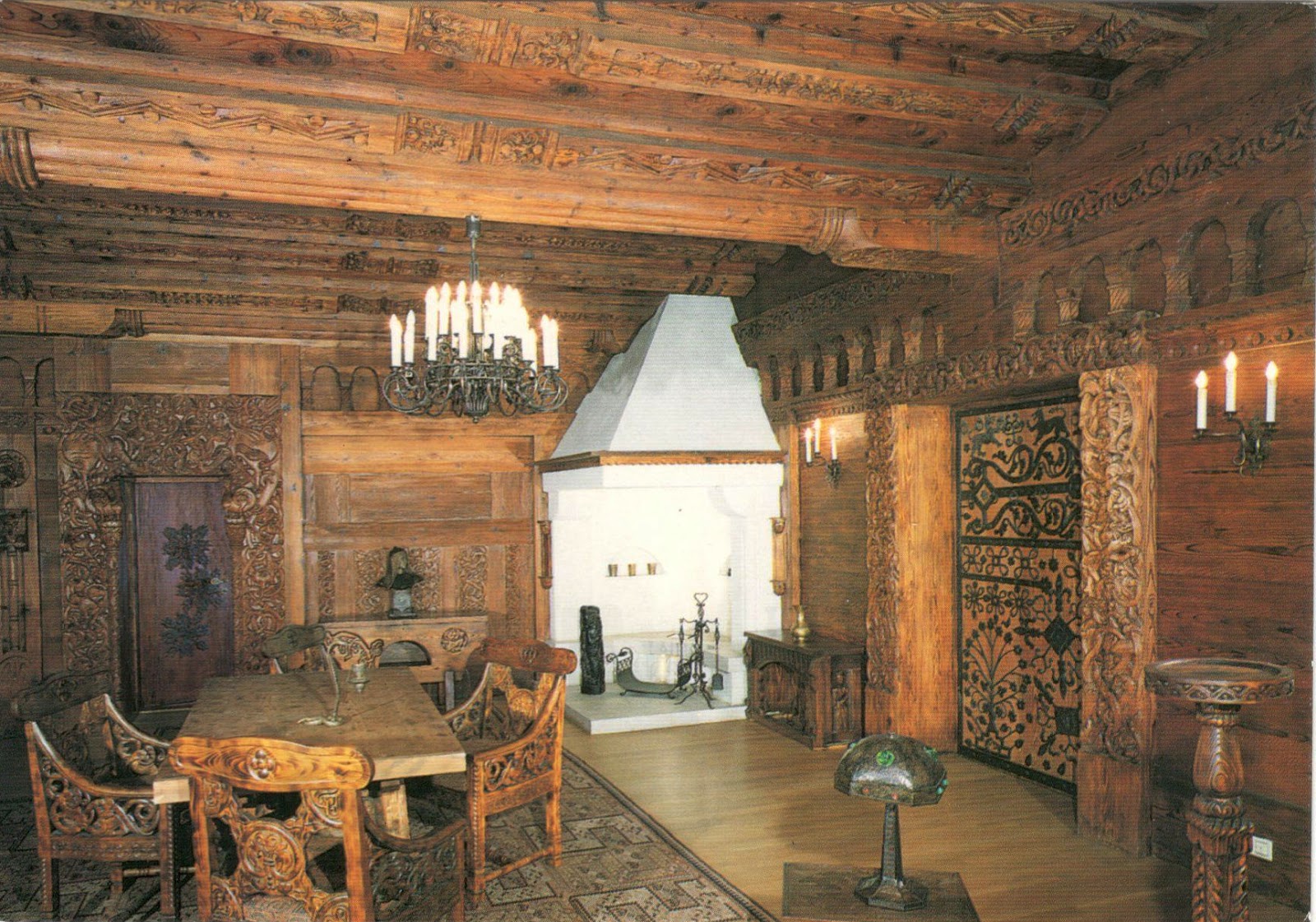
3378 Cotroceni National Museum - The Norwegian Room

Over time, the Cotroceni Ensemble has undergone several changes, but kept all the time both religious function as well as the one of princely residence. Barbu Ştirbey (1849-1853) restored and redecorated the palace, which became his summer residence. In addition, to facilitate links with Bucharest, the prince built a new road that cut the great domain of the monastery, thus separating the princely area from the one of the future Botanical Garden, of which beginnings date back to 1860.

January 15, 2020

1411, 3357 ROMANIA (Botoşani) - Mihai Eminescu (1850-1889)

1411 Mihai Eminescu at 19 year, in Prague, in 1869

Posted on 17.01.2015, 15.01.2020
On 15 January 1850 was born in the village of Ipoteşti, near of Botoşani (then located in the Principality of Moldavia), Mihail Eminovici, the seventh of eleven children of George and Raluca Eminovici. He spent his childhood in Botoşani and Ipoteşti, then he attended school in Cernăuţi, in Bucovina (then in  Austria-Hungary). The first evidence of Eminescu as a writer is from 1866, when he published the poem La mormântul lui Aron Pumnul (At the Grave of Aron Pumnul) in a booklet issued by the students on the occasion of the death of their teacher.

3357 The cover of the only volume
printed during Eminescu's life (1883)

Another poem was published in Iosif Vulcan's literary magazine Familia in Pest, and this began a steady series of published poems. Iosif Vulcan, who disliked the Slavic suffix "-ici" of the poet's last name, chose for him the more Romanian "nom de plume" Mihai Eminescu. Since 1867 he joined to some theatrical troupes as a clerk and prompter, and at long last he settled in  Bucharest, where became a clerk and copyist for the National Theater. He continued to write and publish poems, and began his novel Geniu pustiu (Wasted Genius), published posthumously in 1904.

January 14, 2020

3356 ROMANIA (Bucharest) - Postcrossing Meetup, Bucharest, 1 December 2018

3356 The twelfth postcard of the series
"100 years since the Great Union of Romania" (12/12)
- the Michael the Brave 30th Guards Brigade
on National Day parade


The last meeting of the Romanian postcrossers in the year of the Centenary of the Great Union took place on Bucharest, of course on December 1, the National Holiday of Romania. Mihnea Răducu chose for these 12th postcard an image from the parade that took place with this occasion, featuring the Michael the Brave 30th Guards Brigade. This unit is a primarily ceremonial, as well as combat unit of the Romanian Land Forces, and was established on 1 July 1860 through a decree issued by Prince Alexandru Ioan Cuza as the 1st Honor Guard battalion of Tirailleurs, which ensured the security of Royal palaces.

January 11, 2020

3347 ROMANIA (Argeş) - Postcrossing Meetup, Curtea de Argeş, 11 November 2018

3347 The eleventh postcard of the series
"100 years since the Great Union of Romania" (11/12)
- Vidraru Dam.


On 11 November, the monthly meeting of the Romanian postcrossers in the year of the Centenary of the Great Union took place this time in Curtea de Argeş, and Mihnea Răducu chose for the postcard a picture of Vidraru Dam, which was completed in 1966 on the Argeș River, in the shadow of the Făgăraș Mountains, and creates Lake Vidraru, which has a total shoreline length of 28 km. The dam's height is 166 metres, the arch length 305 meters and it can store 465 million cubic metres of water.

January 10, 2020

3187, 3344 ROMANIA - Vlad the Impaler (1431-1476/77)

Ambras Castle portrait of Vlad III (c. 1560),
reputedly a copy of an original
made during his lifetime

Posted on 02.11.2017, 10.01.2020
Vlad III, known as Vlad the Impaler (Romanian: Vlad Țepeș), was voivode of Wallachia three times between 1448 and his death. Even if he didn't reign more then 7 years, he remained in the collective memory of the Romanians as a national hero, because on the one hand he constantly fought with the Ottoman Empire, regardless of the consequences, trying to preserve the country's independence, and on the other he strengthened the voivode's position and the rule of law.

3344 The family tree of Vlad the Impaler (House of Basarab)

He took drastic measures against the theft, promoted work and punished the laziness, eliminated the begging, supported fair trade, and encouraged honesty, punishing the traitors harshly. For the Romanians, Vlad Ţepeş remained the voivode during which any passerby could drink water from the fountain of Târgovişte Fortress with a large solid gold goblet, without anyone stealing it (fact confirmed by historical sources). Even nowadays the Romanians invoke them when it comes to the generalized theft and corruption, with a verse by Mihai Eminescu: "Rise once more, o Ţepeş, lord!"

January 9, 2020

3341 ROMANIA (Braşov) - Prejmer fortified church - part of Villages with Fortified Churches in Transylvania (UNESCO WHS)


Located in Burzenland, Prejmer fortified church was initially Roman Catholic, but became Lutheran following the Reformation. Around 1211, King Andrew II of Hungary permitted the Germanic Teutonic Knights to settle around Prejmer, where they began constructing a church in 1218, in Gothic style. They were responsible for the Greek cross plan, the only one of its kind in Transylvania, but found in a few churches in northeast Germany. Following their expulsion in 1225, the Cistercians, who took over in 1240, finished the church.

January 5, 2020

3335 ROMANIA (Ialomiţa / Constanţa) - King Carol I Bridge


King Carol I Bridge (renamed during the communist period Anghel Saligny Bridge) was built between 1890 and 1895 to ensure the railway connection between Bucharest and Constanța. The railway section between Constanţa and Cernavodă was built in 1860, and in 1879, one year after Dobrudja became part of Romania, began the construction of the Bucharest-Feteşti section. Had to be realized only the connection between Feteşti and Cernavodă, about 21 km, including two bridges, over Borcea Branch and over the Danube. At that time the last bridge over the Danube was the Franz Josef Bridge in Novi Sad, located 955 km upstream and inaugurated in 1883.

January 4, 2020

3334 ROMANIA (Bucharest) - Postcrossing Meetup, Bucharest, 7 October 2018

3334 The tenth postcard of the series
"100 years since the Great Union of Romania" (10/12)
- Xenofon Street in Bucharest.


On 7 October, the meeting of the Romanian postcrossers in the year of the Centenary of the Great Union took place again in Bucharest, and Mihnea Răducu chose for the postcard the road to Bucharest's highest altitude point, which is a unique one in the capital city of Romania. Located in the Cotroceni area, the Xenofon street, as it is named, after Greek philosopher author of famed Anabasis, is often referenced as the city's only stairways street. The 220 years old and narrow road is less than 100 meters long but has 70 steps (divided into two sections), and links the Constantin Istrati street to the Suter alley. 

January 3, 2020

3328 ROMANIA (Prahova) - Postcrossing Meetup, Cornu, 15 September 2018

3328 The nineth postcard of the series
"100 years since the Great Union of Romania" (9/12)
- Cornu landscape.


In september, on 15, the meeting of the Romanian postcrossers in the year of the Centenary of the Great Union took place in Cornu, a commune located in the northwest of Prahova County, on the middle course of the Prahova river, 90 km north of Bucharest. It was founded in 1583, by refugees fleeing from other localities in the path of wars. On its territory is the church Ascension of the Lord of the former hermitage Drăghici Spătarul (18th century, rebuilt in 1811).

January 1, 2020

2278, 3320 ROMANIA (Prahova) - Caraiman Monastery in Buşteni

3320 Caraiman Monastery (2)

Posted on 08.02.2016, 01.01.2020
Situated in town Buşteni, at the foot of the massif Caraiman, in a glade which has in its center a fir tree with a unique shape, the Caraiman Monastery is an orthodox monastery, founded in 1998 at the initiative of Father Gherontie Puiu. The Heroes' Cross erected on Caraiman Peak seems to guard the path which leads the steps of the pilgrims towards the monastery. In 2010 the monastic settlement was raised from the rank of skete, to the rank of the monastery.

2278 Caraiman Monastery (1)

The monastery has two church: a wooden one, inspired by the architecture of the churches of Maramureş, built between 1998 and 2001, and dedicated to the Assumption, and a larger one, from brick, with three steeples, built between 2002 to 2007 and dedicated to the Exaltation of the Holy Cross. The last has a porch with columns, from where can be seen in the opposite side of the court the bell tower, bordered by cells.

December 28, 2019

3288, 3313 ROMANIA (Hunedoara) - The Bison Reserve Silvuț-Haţeg

3313

Posted on 10.12.2019, 28.12.2019
Bison is a type of massive herbivorous animal from the ruminant category, belonging to the Bovinae subfamily, which was once widespread as a wild animal in the northern hemisphere. The only living representatives of the bison are its two varieties, the American bison (Bison bison) and the European bison - the wisent (Bison bonasus). European bison were hunted to extinction in the wild in the early 20th century, with the last wild animals of the Carpathian wisent subspecies being shot in the Białowieża Forest (on the Belarus-Poland border) in 1921, and the last of Caucasian wisent in the northwestern Caucasus in 1927.

3288
 

In Romania, the wisent disappeared in the 18th century; with the last exemplar in the wild being killed in Transylvania in 1790. The species that can be found in Europe at present is a hybrid between the Caucasian Bison and the Lowland Bison. A Caucasian Bison was captured in 1908 and taken to Germany, where he lived 18 years in captivity. There, he bred with females of the Lowland species and produced the species known today as the European Bison. The wisent have been successfully reintroduced in the wild since 1951, and now is found in Poland, Belarus, Romania and Moldova, herds also existing in Lithuania, Ukraine, Russia and Kyrgyzstan.

3310 ROMANIA - Postcrossing Meetup, Bucharest, 14 July 2018

3310 The seventh postcard of the series
"100 years since the Great Union of Romania" (7/12)
- traditional Romanian dance named hora.


The seventh meeting of the Romanian postcrossers in the year of the Centenary of the Great Union took place on July 14, 2018, in Bucharest, and Mihnea Răducu chose for the postcard a traditional Romanian folk dance named horă. The dancers hold each other's hands and the circle spins, usually counterclockwise, as each participant follows a sequence of three steps forward and one step back. The dance is usually accompanied by musical instruments such as the cymbalom, accordion, violin, viola, double bass, saxophone, trumpet or the pan pipes.

December 24, 2019

3300 ROMANIA - Postcrossing Meetup, Bucharest, 17 June 2018

3300 The sixth postcard of the series
"100 years since the Great Union of Romania" (6/12)
- Pelicans in Danube Delta


The sixth meeting of the Romanian postcrossers in the year of the Centenary of the Great Union took place on June 17, 2018, in Bucharest, and Mihnea Răducu chose for the postcard some pelicans, probable great white pelicans (Pelecanus onocrotalus), in Danube Delta (UNESCO WHS, about which I wrote here). The great white pelican is a huge bird (140 to 180 cm in length) with a 28.9 to 47.1 cm enormous pink and yellow bill, and a dull pale-yellow gular pouch. The wingspan measures 226 to 360 cm, the latter measurement being the highest among extant flying animals outside of the great albatross. It mainly eats fish.

December 22, 2019

3298 ROMANIA (Alba) - Câlnic Citadel - part of Villages with Fortified Churches in Transylvania (UNESCO WHS)


The Câlnic Citadel began around 1270 as a residence for a Graf (Chyl de Kelling, whose family gave the village its German name), one of the last such to be built in Transylvania. The strong parallelepiped structure, with a ground floor and three floors for living space, came to be known as the Siegfried tower. Subsequent, frequent Ottoman attacks led the keep to be fortified with a defensive level and surrounded by a massive wall. The oval precinct around the keep was fitted with a guard tower to the south and a gate tower to the north. The structure was surrounded by a water-filled moat, with access only by drawbridge.