Showing posts with label Places I have been. Show all posts

February 26, 2020

0134, 3439 SPAIN (Catalonia) - Casa Batlló - part of Works of Antoni Gaudí (UNESCO WHS)

part of Works of Antoni Gaudi (UNESCO WHS)
0134

Part of the Manzana de la Discordia (Block of Discord, but also Apple of Discord), located at 43, Passeig de Gràcia,  in the Eixample district of Barcelona, Casa Batlló is a building restored in the years 1904-1906 by Antoni Gaudí and Josep Maria Jujol (with the contribution of Gaudí's assistants, Domènec Sugrañes i Gras, Josep Canaleta and Joan Rubió). Like all the buildings designed by the brilliant Catalan architect, it looks stunning and very modern, even for today's viewer, so it's hard to imagine how strange it may seem, with its organic, even visceral forms, for the early 20th century Barcelonians.

3439

The building consists of a ground floor, a main floor with a courtyard, four further self-contained floors, a loft and a roof terrace. There is private access to the noble floor (the main floor), and a communal stairwell set within the building well, which has been expanded and artistically tiled as though it were part of the exterior facade. The entire building is astonishing, but stand out in the first place the ground floor (with its tracery, irregular oval windows and flowing sculpted stone work) and the arched roof like a back of a dragon or dinosaur, plated with tiles in the form of scales.

January 21, 2020

3003, 3378 ROMANIA (Bucharest) - Cotroceni Palace


Posted on 30.03.2017, 21.01.2020
Between 1679 and 1681, Şerban Cantacuzino, Prince of Wallachia, has deforested a densely wooded area of the former Vlăsia forest, on the right bank of the Dâmboviţa River, on Cotroceni Hill, and erected a monastery on the place of an old wooden hermitage. The monastery was surrounded by walls and had a beautiful church built in a a style that anticipated the Brâncovenesc style. Inside the monastery, the prince raised also a royal residence.

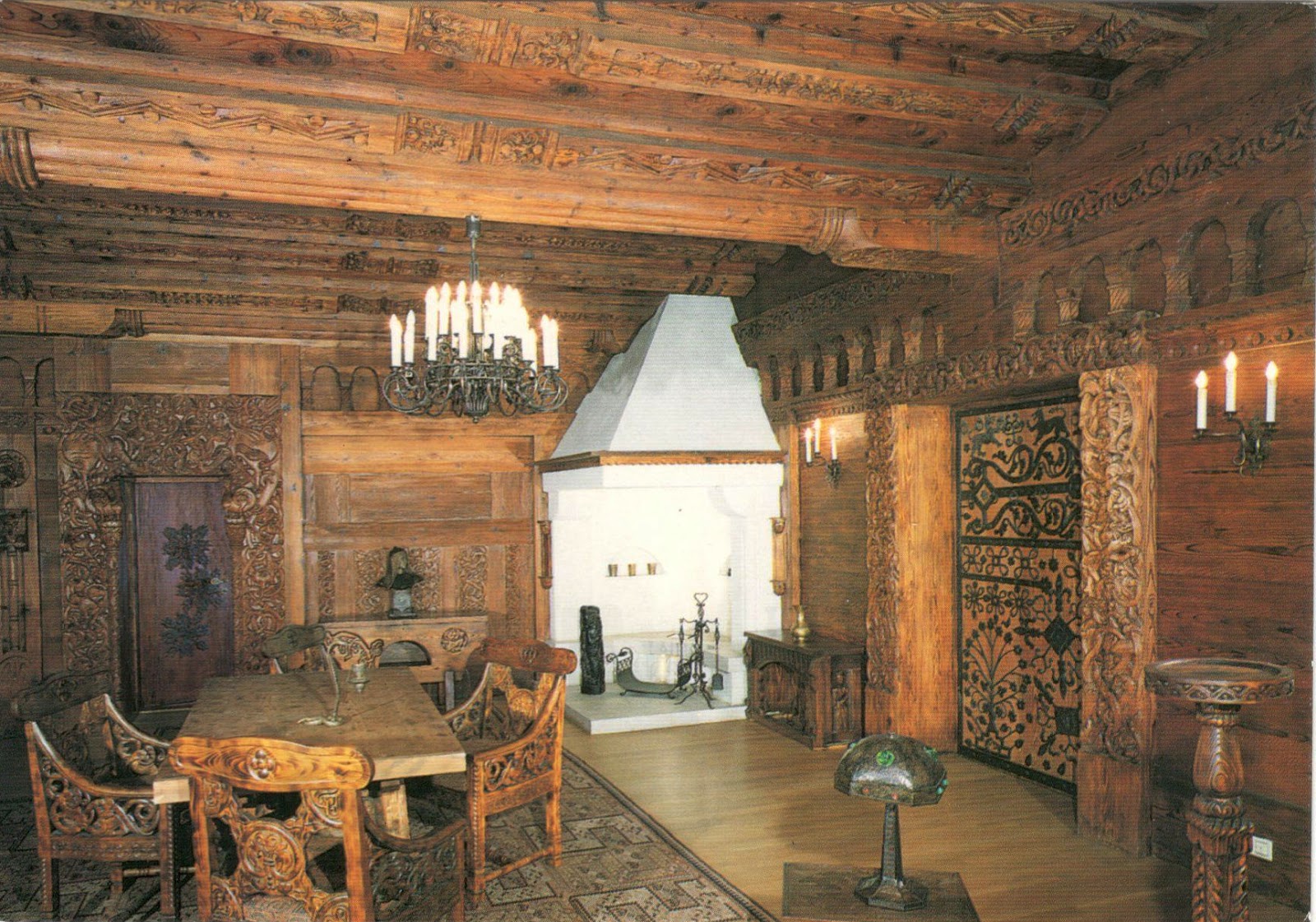
3378 Cotroceni National Museum - The Norwegian Room

Over time, the Cotroceni Ensemble has undergone several changes, but kept all the time both religious function as well as the one of princely residence. Barbu Ştirbey (1849-1853) restored and redecorated the palace, which became his summer residence. In addition, to facilitate links with Bucharest, the prince built a new road that cut the great domain of the monastery, thus separating the princely area from the one of the future Botanical Garden, of which beginnings date back to 1860.

January 3, 2020

0555-0557, 3319, 3327 BULGARIA (Burgas) - Ancient City of Nessebar (UNESCO WHS)

3319 The Ancient City of Nessebar

Posted on 15.03.2013, 31.12.2019, 03.01.2020
For miles, the road from Varna to Nessebar creeps like a snake along the coast, through the forests where coniferous and deciduous mix like the ethnic groups in the Balkans. But that's not what saw with three millennia ago the Thracians, who came from inland to built the settlement named Menebria, neither the Greeks, who came from the sea to lay the foundations of the prosperous colony named Mesembria. In 71 BC the town fell under Roman rule, yet continued to enjoy privileges, and from the 5th century AD onwards had become one of the most important strongholds of the Byzantine Empire.

0555 A bird's-eye view of the Ancient City of Nessebar

In the following centuries it passed several times from the hands of the Byzantines in those of the Bulgarians, and even of the Crusaders in 1366. The Bulgarian version of the name, Nesebar or Mesebar, has been attested since the 11th century. Conquered by the Ottomans in the same year as Constantinople (1453), it gradually declined until returned to Bulgaria in 1885, becoming since the beginning of the 20th century a key Bulgarian seaside resort.

3327 Vernacular wooden houses in Nessebar
 

As an "outstanding testimony of multilayered cultural and historical heritage", a place where many civilizations left their tangible traces, from the Dorians Black Sea colony's structures to the churches from the Middle Ages and the vernacular wooden houses built in the 19th century, Nessebar was included on the list of UNESCO WHS under the name Ancient City of Nessebar. It is sometimes said to be the town with the highest number of churches per capita, because a total of forty churches had survive, wholly or partly, in the vicinity of the town. Its ancient part is situated on a little peninsula, previously an island, linked with the mainland with only a relatively narrow passageway.

0556 The Church of Christ Pantocrator in Nessebar

One of them is the Church of Christ Pantocrator, constructed in the 13th-14th century and best known for its exterior decoration, rich and colourful. Designed in late Byzantine cross-in-square style, was builded from stones and brickwork, a construction technique known as opus mixtum. The best-known feature of the Church of Christ Pantocrator is the rich and colourful decoration of its exterior walls. Used today as art gallery, is among Bulgaria's best preserved churches of the Middle Ages.

0557 The windmill on the passageway from New Nessebar to Old Nessebar

The Old Windmill shown in the third postcard, located on the passageway from New Nessebar to Old Nessebar, is a lovely, very intact Black Sea style wildmill. Aren't known too much about it, but it's supposed that was built in the Bulgarian revival period from the 17th to the 19th century. The building have a rough style, the design being entirely functional. The windmill base reveals a wooden guiderail and direct wood-to-wood contact.

January 1, 2020

2278, 3320 ROMANIA (Prahova) - Caraiman Monastery in Buşteni

3320 Caraiman Monastery (2)

Posted on 08.02.2016, 01.01.2020
Situated in town Buşteni, at the foot of the massif Caraiman, in a glade which has in its center a fir tree with a unique shape, the Caraiman Monastery is an orthodox monastery, founded in 1998 at the initiative of Father Gherontie Puiu. The Heroes' Cross erected on Caraiman Peak seems to guard the path which leads the steps of the pilgrims towards the monastery. In 2010 the monastic settlement was raised from the rank of skete, to the rank of the monastery.

2278 Caraiman Monastery (1)

The monastery has two church: a wooden one, inspired by the architecture of the churches of Maramureş, built between 1998 and 2001, and dedicated to the Assumption, and a larger one, from brick, with three steeples, built between 2002 to 2007 and dedicated to the Exaltation of the Holy Cross. The last has a porch with columns, from where can be seen in the opposite side of the court the bell tower, bordered by cells.

December 31, 2019

3318 GREECE (Eastern Macedonia and Thrace) - Giola in Thassos Island


Located in the south of the island of Thassos, near of little village Astris, Giola is а natural seа lagοon carved in rоcks. Separated from the sea by a narrow strip of rocks, it looks like a pool of crystal clear water, carved into a coral reef that rises above it, with sizеs 2Ox15 meters. The height of the rocks reaches up to 8 meters from where the swimmers can dive into the clear waters. Legend says that the pool was created by the Greek god Zeus, and Aphrodite went swimming there, so it is also known as "The tear of Aphrodite."

December 28, 2019

3288, 3313 ROMANIA (Hunedoara) - The Bison Reserve Silvuț-Haţeg

3313

Posted on 10.12.2019, 28.12.2019
Bison is a type of massive herbivorous animal from the ruminant category, belonging to the Bovinae subfamily, which was once widespread as a wild animal in the northern hemisphere. The only living representatives of the bison are its two varieties, the American bison (Bison bison) and the European bison - the wisent (Bison bonasus). European bison were hunted to extinction in the wild in the early 20th century, with the last wild animals of the Carpathian wisent subspecies being shot in the Białowieża Forest (on the Belarus-Poland border) in 1921, and the last of Caucasian wisent in the northwestern Caucasus in 1927.

3288
 

In Romania, the wisent disappeared in the 18th century; with the last exemplar in the wild being killed in Transylvania in 1790. The species that can be found in Europe at present is a hybrid between the Caucasian Bison and the Lowland Bison. A Caucasian Bison was captured in 1908 and taken to Germany, where he lived 18 years in captivity. There, he bred with females of the Lowland species and produced the species known today as the European Bison. The wisent have been successfully reintroduced in the wild since 1951, and now is found in Poland, Belarus, Romania and Moldova, herds also existing in Lithuania, Ukraine, Russia and Kyrgyzstan.

December 1, 2019

0601, 0602, 1900, 3020, 3277 ROMANIA (Hunedoara) - Corvin Castle

0601 Hunedoara - Corvin Castle (1)

Posted on 16.04.2013, 17.09.2015, 17.04.2017, 01.12.2019
Located in Hunedoara, on a rock at the foot of which flow Zlaşti creek, a tributary of the Cerna River, Corvin Castle, known also as Hunyadi Castle or Hunedoara Castle, is one of the most important monuments of Gothic inspiration from Romania. It was originally given, in 1409, by Sigismund of Luxemburg, king of Hungary, to Vlach (Romanian) knyaz Voyk (Voicu), for his distinction in the wars against the Ottomans. On this occasion Voyk was ennobled and took the name Hunyadi (de Hunedoara) after the property name, as was the custom.

0602 Hunedoara - Corvin Castle (2)

His son, John Hunyadi (Iancu de Hunedoara), Ban of Severin (1438-1441), then Voivode of Transylvania (1441-1446), rebuilt the castle from the foundation starting with 1446, the year in which was elected as Regent-Governor of the Kingdom of Hungary by the Diet, a position which he will hold until 1453.
The castle was built mainly in Gothic style, but with Renaissance architectural elements. The walls were flanked by rectangular or circular towers, three of them (the Capistrano Tower, the Deserted Tower and the Drummers' Tower) being used as prisons, and one (the Mace Tower) was solely built for defence purposes.

1900 Hunedoara - Corvin Castle (3)

The rectangular shaped towers had large openings to accommodate larger weapons. The castle has three large areas, decorated with marble: the Knight's Hall (used for feasts), the Diet Hall (used for ceremonies) and the circular stairway. In 1456, John Hunyadi died and work on the castle has stagnated. Ladislaus Hunyadi, the elder son of John, has owned the castle just one year, because in 1457 he fall prey to intrigues. His younger brother, Matthias Corvinus, became King of Hungary and Croatia from 1458, then also King of Bohemia and Duke of Austria, and new commissions were being undergone to construct the Matia Wing of the castle.

3020 Hunedoara - Corvin Castle (4)

In 1480, the work was stopped and it was recognised as being one of the biggest and most impressive buildings in Western Europe. In 1482 Matthias donated the domain and the castle to his illegitimate son, John Corvinus (Ioan Corvin). After his death and the death of his children the Hunyadi family died out on the paternal side. In the following two centuries the castle passed through several hands, until 1724 when became the property of the Austrian State, then in 1867 to the Austro-Hungarian Empire, and in 1918 to the Kingdom of Romania.

3277 Hunedoara - Corvin Castle, inside

In the 17th century new additions have been made to the castle, for aesthetic and military purposes, two new towers being constructed: the White Tower and the Artillery Tower. The current castle is the result of a fanciful restoration campaign undertaken after a disastrous fire from 1854 and many decades of total neglect.

3276 GREECE (Eastern Macedonia and Thrace) - Limenas Thassou


Limenas Thassou (Port of Thassos), situated at the northern side, opposite the mainland and about 10 kilometres from Keramoti, is the capital and main town of the Thassou island, with a total of 4000 inhabitants. The current town, surrounded by the densely wooded pine green mountains, was built west from the ancient town. In and around Thasos, there are many ruins dating from antiquity. Most of the finds from local archaeological sites are on display at the Archaeological Museum of Thasos.

November 30, 2019

3273 ROMANIA - Second Train Postcrossing Meetup, Bucharest-Ploieşti, 24 February 2018

3273 The third postcard of the series
"100 years since the Great Union of Romania" (3/12)
- The electric-diesel locomotive 92 53 0 641179-2

The third meeting of the Romanian postcrossers in the year of the Centenary of the Great Union took place on February 24, 2018, and was actually the second train Postcrossing meetup between Bucharest and Ploieşti (the first took place on February 29, 2016). On the postcard is the 6-axis electric-diesel locomotive 92 53 0 641179-2 (GM 1179), considered the most beautiful locomotive of the Sibiu depot, and nicknamed the Blue Fury.

November 28, 2019

3270 GREECE (Eastern Macedonia and Thrace) - The map of Thassos


Lying close to the coast of Eastern Macedonia, Thassos, the northernmost major Greek island, is geographically part of the North Aegean Sea, but administratively belongs to the Kavala regional unit. It is formed mainly by gneisses, schists and marbles of the Rhodope Massif, and is of generally rounded shape. The terrain is mountainous but not particularly rugged, rising gradually from coast to centre. Pine forest covers much of the island's eastern slopes. Thassos is also the name of the largest town (officially known as Limenas Thassou, "Port of Thassos"), situated at the northern side, opposite the mainland and about 10 kilometres from Keramoti.

November 26, 2019

2056, 2519, 3267 ROMANIA (Hunedoara / Alba) - Sarmizegetusa Regia - part of Dacian Fortresses of the Orăștie Mountains (UNESCO WHS)

2056 Sarmizegetusa Regia (1)

Posted on 21.11.2015, 03.05.2016, 26.11.2019
Emperor Trajan announced 123 days of celebrations throughout the Roman Empire, after the defeat of the Dacians and the death of King Decebalus in 106 A.D. Very normal, since a dangerous enemy was eliminated, fabulous riches entered in the treasury, and 100,000 male slaves were sent to Rome. Dacia then contributed 700 million Denarii per annum (about 2.5 billion USD in nowadays) to the Roman economy, providing finance for future campaigns and assisting with the rapid expansion of Roman towns throughout Europe.

2519 Sarmizegetusa Regia (2)

Even if the Romans destroyed the defensive system of the Dacian Kingdom, its extensive and well-preserved remains, standing in spectacular natural surroundings, give even today a dramatic picture of a vigorous and innovative civilization. Built in the 1st centuries B.C. and A.D., these fortresses show an unusual fusion of military and religious architectural techniques and concepts from the classical world and the late European Iron Age.

3267 Sarmizegetusa Regia (3)

Six of these fortresses (Sarmizegetusa Regia, Costeşti-Cetăţuie, Costeşti-Blidaru, Piatra Roşie, Bănița and Căpâlna), built in murus dacicus style in the Orăştie Mountains, were designated as a UNESCO World Heritage Site in 1999. Murus Dacicus (Latin for Dacian Wall) is a mix between Dacian construction methods and methods imported from Greek and Roman architecture and masonry, with some peculiarities that make it unique.