Showing posts with label Militaria. Show all posts

January 14, 2020

3356 ROMANIA (Bucharest) - Postcrossing Meetup, Bucharest, 1 December 2018

3356 The twelfth postcard of the series
"100 years since the Great Union of Romania" (12/12)
- the Michael the Brave 30th Guards Brigade
on National Day parade


The last meeting of the Romanian postcrossers in the year of the Centenary of the Great Union took place on Bucharest, of course on December 1, the National Holiday of Romania. Mihnea Răducu chose for these 12th postcard an image from the parade that took place with this occasion, featuring the Michael the Brave 30th Guards Brigade. This unit is a primarily ceremonial, as well as combat unit of the Romanian Land Forces, and was established on 1 July 1860 through a decree issued by Prince Alexandru Ioan Cuza as the 1st Honor Guard battalion of Tirailleurs, which ensured the security of Royal palaces.

December 27, 2019

3309 UNITED STATES (Hawaii) - Pearl Harbour


Located on the island of Oahu, west of Honolulu, near the center of the Pacific Ocean, roughly 2,000 miles from the U.S. mainland and about 4,000 miles from Japan, Pearl Harbor is well known as the scene of a devastating surprise attack by Japanese forces on December 7, 1941, that finally propelled the United States into WWII. Just before 8 a.m. on that Sunday morning, hundreds of Japanese fighter planes descended on the base, where they managed to destroy or damage 21 American naval vessels, including 8 battleships, and over 300 airplanes. 2,390 Americans died in the attack, and another 1,178 were wounded.

December 20, 2019

3295 ROMANIA - Postcrossing Meetup, Bucharest, 5 May 2018

3295 The fifth postcard of the series
"100 years since the Great Union of Romania" (5/12)
- "The passage of the Romanian army to Dobruja"
by Henryk Dembitzky.


The fifth meeting of the Romanian postcrossers in the year of the Centenary of the Great Union took place on May 5, 2018, in Bucharest. This time Mihnea Răducu chose for the postcard dedicated to the meeting the lithography The passage of the Romanian army to Dobrudja by Henryk Dembitzky (1830-1906), a Polish artist, graduate of the Royal Academy of Fine Arts in Vienna, refugee in Romania. He made his debut as a lithographer in Bucharest, in 1877, therefore in the very year in which Romania proclaimed its independence, and his lithographs in colors related to the War of Independence are very well known by the Romanians.

November 29, 2019

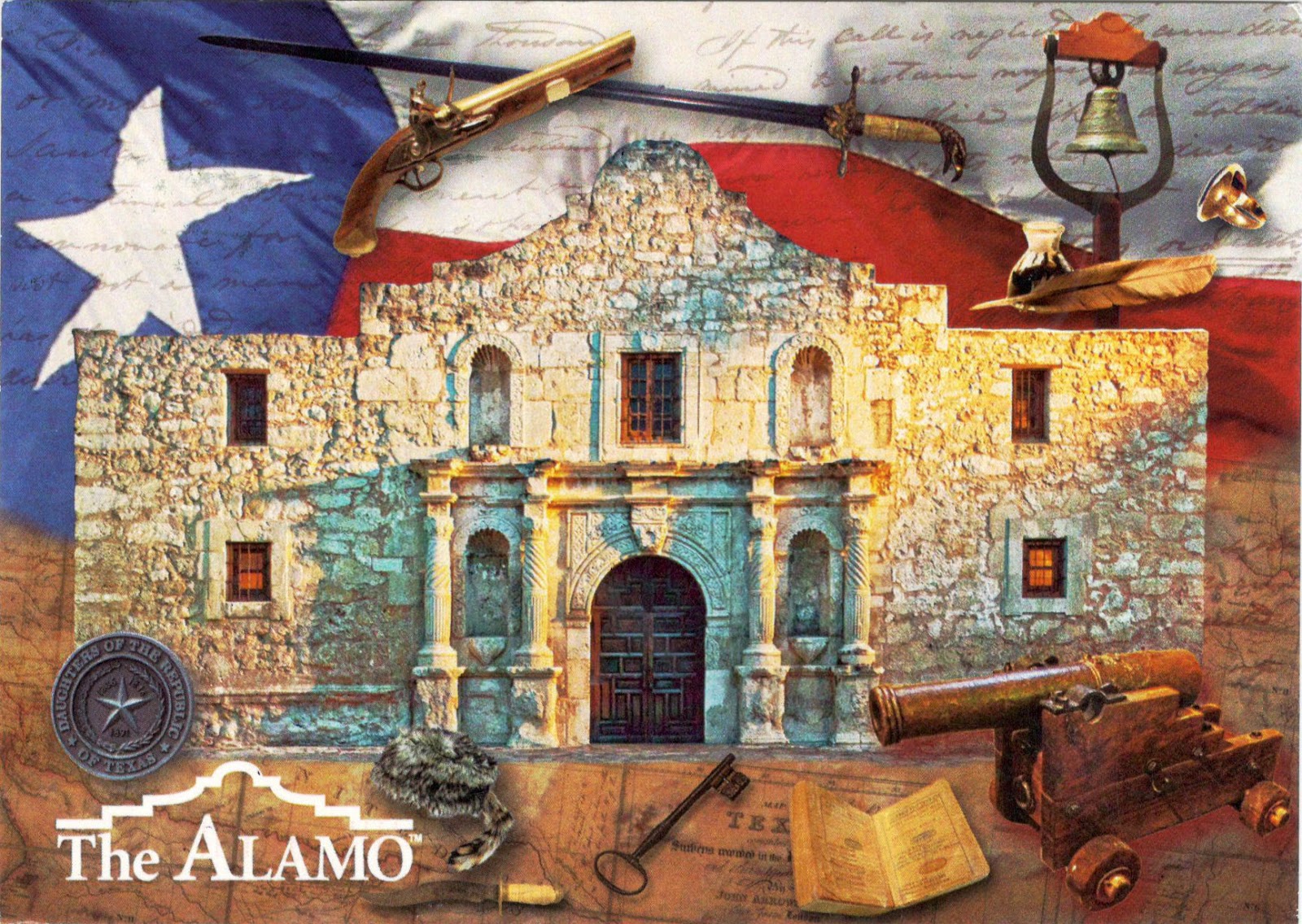
3271 UNITED STATES (Texas) - Alamo Mission in San Antonio - part of San Antonio Missions (UNESCO WHS)

3271 The chapel of the Alamo Mission,
known as the "Shrine of Texas Liberty".

The San Antonio Missions are a group of five frontier mission complexes situated along a stretch of the San Antonio River basin in southern Texas, as well as a ranch located 37 kilometres to the south. It includes architectural and archaeological structures, farmlands (labores), cattle grounds (ranchos), residencies, churches, workshops, kilns, wells, perimeter walls and granaries, as well as water distribution systems. The complexes were built by Franciscan missionaries in the 18th century and illustrate the Spanish Crown’s efforts to colonize, evangelize and defend the northern frontier of New Spain.

November 18, 2017

3200 TAIWAN - National Revolutionary Martyrs' Shrine in Taipei


The National Revolutionary Martyrs' Shrine, resting on the slopes of the Chingshan Mountain and overseeing the Keelung River, is located right next to the Grand Hotel in Taipei, and is dedicated to the war dead of the Republic of China. Built in 1969, it recalls the architecture of the Hall of Supreme Harmony in Beijing's Forbidden City. The structure houses the spirit tablets of about 390,000 persons killed, among other engagements, during the Xinhai Revolution, Northern Expedition, Second Sino-Japanese War, Chinese Civil War, and the First and Second Taiwan Strait Crises.

October 22, 2017

1851, 3174 SINGAPORE (Central Region) - Fort Canning

Singapore
3174 The Gate of Fort Canning


Between 1859 and 1861, a fort was build on a small hill located in the southeast portion of Singapore, to defend the harbour. It was named Fort Canning after Viscount Charles John Canning, who was then Governor-General and the first Viceroy of India. The fortifications were regarded as a failure from the beginning, as ships could easily get close enough to destroy the town and remain out of range of the fort’s guns. Moreover the lack of a water supply rendered the fort useless as a place of refuge.

Singapore
1851 Lt. General Arthur Percival (General Officer Commanding
of the British land forces in Malaya and Singapore) and
another British Officer in Battle Box

In 1907, the old fort was demolished, and in 1920's a military headquarters was built with underground rooms serving as operations centre. Completed in 1938, the Battle Box comprised 30 rooms and had its own generator. By 1941, it was considered to be too small for its intended use, and a new Combined Operations Headquarters was build. The Battle Box remained the Headquarters of Major General  Frank Keith Simmons, who was responsible for the defence of Singapore Island.

September 17, 2017

3152 VIETNAM (Red River Delta) - Millennial Anniversary of Hanoi


Hanoi, the capital of Vietnam and the country's second largest city by population (7.7 million people in 2015). In 1010, Lý Thái Tổ, the first ruler of the Lý Dynasty, moved the capital of Đại Việt (literally Great Viet) to the site of the Đại La Citadel. Claiming to have seen a dragon ascending the Red River, he renamed the site Thăng Long (Soaring Dragon) - a name still used poetically to this day. This is considered the birth date of Hanoi. From 1010 until 1802, it was the most important political centre of Vietnam.

October 20, 2016

2833 ITALY (Friuli-Venezia Giulia) - Aurelio Baruzzi, the hero of Gorizia


Born in 1897 at Lugo, at 30 km from Ravenna, Aurelio Baruzzi voluntarily enrolled in the Royal Italian Army in 1915, at the age of only 18 years, as infantry officer cadet. He participated in the WWI with the rank of second lieutenant, in the 28th Regiment "Pavia", which fought in the Karst region. He distinguished himself in the fighting on the front line in the Third Battle of the Isonzo, receiving a bronze medal. Since August 6, 1916 he took part at the Sixth Battle of the Isonzo, also known as the Battle of Gorizia.

October 16, 2016

2827 ROMANIA - TR-85M1 "Bizonul" (The Bison)


The TR-85 is a main battle tank designed for the armed forces of Romania. Based on the TR-77-580 (Romanian-built version of the Soviet T-55 tank), the TR-85 tank was developed from 1978 to 1985 and produced from 1986 until 1990. A modernization program was initiated in March 1994 in order to upgrade the TR-85 tanks to NATO standards. The result was the TR-85M1 "Bizonul" (The Bison) main battle tank, currently the most modern tank in service with the Romanian Land Forces.

September 20, 2016

2761 The air route of the Screaming Eagles in D-Day

2761 The air route of the Screaming Eagles in D-Day,
the insignia of the 101st Airborne Division,
and MP4 (a fortification on the Guernsey Island)

The first United States combat operations during Operation Overlord (the invasion of Normandy by the Western Allies on June 6, 1944 during WWII) were the airborne landings. Around 13,100 American paratroopers of the 82nd Airborne and 101st Airborne Divisions made night parachute drops early on D-Day, followed by 3,937 glider troops flown in by day. As the opening maneuver of Operation Neptune (the assault operation for Overlord) the American airborne divisions were delivered to the continent in two parachute and six glider missions.

September 9, 2016

2747 THAILAND (Bangkok) - Thai Royal Guards parade


Also known as Trooping the Colour, the Thai Royal Guards parade occurs every December 2 since 1953, in celebration of the birthday of the King of Thailand, during which the King's Guard of the Royal Thai Armed Forces perform a military parade and pledge loyalty to the monarch. The venue is the Royal Plaza at Bangkok, in front of the Dusit Palace and its Ananta Samakhom Throne Hall. The ceremony is inspired by the Trooping the Colour performed by regiments of the British and Commonwealth armies.

July 18, 2016

2653 UNITED STATES (California) - The Leap Frogs navy parachute team over Coronado

2653 The Leap Frogs navy parachute team freefalls from
12.000 feet and forms a star formation over the Coronado
Bay Bridge and the Naval Amphibious Base Coronado.
The SEAL parachuting demonstration occurred on the Fourth of July.

The United States Navy Parachute Team, commonly known as the "Leap Frogs", consists of active-duty personnel drawn from parachute riggers, naval special warfare, including Navy SEALs, special warfare combatant-craft crewmen, and support personnel. The Leap Frogs are all volunteers. The team was officially commissioned as the U.S. Navy Parachute Team in 1974 by the Chief of Naval Operations and assigned the mission of demonstrating Navy excellence throughout the United States.

June 2, 2016

2591 UNITED STATES - Confederate Generals


In the 1860 presidential election, Republicans, led by Abraham Lincoln, supported banning slavery in all the U.S. territories, something the Southern states viewed as a violation of their constitutional rights. The Republican Party, dominant in the North, secured a majority of the electoral votes, and Lincoln was elected the first Republican president, but before his inauguration, seven slave states individually declared their secession from the U.S. and formed the Confederate States of America.

December 18, 2015

2130 CANADA - The Musical Ride of the Royal Canadian Mounted Police


One of the most iconic symbols of Canada is the The Royal Canadian Mounted Police (RCMP), who perform their Musical Ride at countless venues the world over each year. The horses, all black, and the 32 riders in their scarlet jackets, Stetson hats and lances perform a ride that is precision perfection. Members are first and foremost police officers who, after at least two years of active police work, volunteer for duty with the Musical Ride.

July 31, 2015

1573, 1591, 1796 UNITED STATES (Hawaii) - USS Arizona Memorial

1573 Hawaii - USS Arizona Memorial

Posted on 11.05.2015, 18.05.2015, 31.07.2015
USS Arizona was a Pennsylvania-class battleship built for and by the United States Navy in the mid-1910s. Although commissioned in 1916, the ship remained stateside during WWI, and practically didn't participate in any battle, until she was bombed during the Japanese attack on Pearl Harbor on 7 December 1941. She exploded and sank, killing 1,177 officers and crewmen. Unlike many of the other ships sunk or damaged that day, Arizona could not be fully salvaged, though the Navy removed parts of the ship for reuse. The wreck still lies at the bottom of Pearl Harbor and the USS Arizona Memorial, dedicated on 30 May 1962 to all those who died during the attack, straddles the ship's hull, without touching it.

1591 Hawaii - USS Arizona Memorial (aerial view)

The national memorial was designed by Honolulu architect Alfred Preis who had been detained at Sand Island at the start of the war as an enemy of the country because of his Austrian birth. The United States Navy specified that the memorial be in the form of a bridge floating above the ship and accommodating 200 people. The 56m-long structure has two peaks at each end connected by a sag in the center of the structure. It represents the height of American pride before the war, the sudden depression of a nation after the attack and the rise of American power to new heights after the war.

1796 Hawaii - USS Arizona Memorial; USS Arizona after the atack;
Punchbowl National Cemetery; USS Arizona in 1920.

Accessible only by boat, the memorial has three main parts: the entry, the assembly room, and the shrine. The assembly room features seven large windows on either wall and ceiling, to commemorate the date of the attack. The memorial also contains an opening in the floor overlooking the sunken decks. It is from this opening that visitors come to pay their respects by tossing flowers. The shrine at the far end is a marble wall that bears the names of all those killed on the Arizona. To the left of the main wall is a small plaque which bears the names of thirty or so crew members who survived.

July 1, 2015

1706 VATICAN CITY - A halbardier of the Pontifical Swiss Guard guarding the statue of Saint Peter Enthroned


As the Vatican City is an enclave within Italy, its military defence is provided by the Italian armed forces, so it has no armed forces of its own. The Palatine Guard and the Noble Guard, the last armed forces of the Vatican City, were disbanded by Pope Paul VI in 1970. The Swiss Guard is a military corps of the Holy See responsible for the personal security of the Pope. At the end of 2005, the Guard had 134 members. Swiss mercenaries were historically recruited by Popes as part of an army for the Papal States, and the Pontifical Swiss Guard was founded by Pope Julius II on 22 January 1506 as the pope's personal bodyguard. Recruitment is arranged by a special agreement between the Holy See and Switzerland.

June 14, 2015

1667 KIRIBATI - Japanese WWII Defenses on Tarawa


During WWII, Japan seized part of the islands which today forms Republic of Kiribati, to form part of their island defenses. The Japanese worked intensely for nearly a year to fortify the island. A series of fourteen coastal defense guns, including four large Vickers 8-inch guns purchased during the Russo-Japanese War from the British, were secured in concrete bunkers and located around the island. The island had a total of 500 pillboxes or "stockades" built from logs and sand, many of which were reinforced with cement. Forty artillery pieces were scattered around the island in various reinforced firing pits.

June 11, 2015

1652 RUSSIA (Moscow) - International Military Tattoo “Spasskaya Tower” 2014


A tattoo is a military performance of music or display of armed forces in general. The term comes from the early 17th century Dutch phrase doe den tap toe ("turn off the tap"), a signal sounded by drummers or trumpeters to instruct innkeepers near military garrisons to stop serving beer and for soldiers to return to their barracks. The tattoo was originally a form of military music, but the practice has evolved into more elaborate shows involving theatrics and musical performances. Russia have recently started annual "Spasskaya Bashnya" International Military Tattoo in Moscow. Its Russian name came from the name of the location where it is performed (the Red Square's Saviour Tower).

March 15, 2015

1490 NORTH KOREA - Propaganda


North Korea it’s a dictatorship of the most extreme kind, a cult of personality beyond anything Stalin or Mao could have imagined, a country as closed off to the world and as secretive as they come, keeping both the outside world and its own people completely in the dark about one another. I'm Romanian and I grew up under the Ceauşescu regime, so I have a basis for comparison and a good understanding of the functioning of such systems. The cult of personality and the nationalist propaganda are present in all countries led by such regimes, with local nuances, because they are essential to maintain a permanent state of siege and justify the isolation. The countries which have different regimes are invariably considered enemies, and a way of thinking that don't comply the dogmas of the single-party can only be a treason, a collaboration with the enemy.

September 17, 2014

1226 UNITED STATES (Pennsylvania) - Gettysburg National Military Park


The Gettysburg National Military Park protects and interprets the landscape of the 1863 Battle of Gettysburg, which involved the largest number of casualties of the entire Civil War, and is often described as the war's turning point. Union Maj. Gen. George Meade's Army of the Potomac defeated attacks by Confederate Gen. Robert E. Lee's Army of Northern Virginia, ending Lee's attempt to invade the North. The GNMP properties include most of the Gettysburg Battlefield, many of the battle's support areas during the battle (e.g., reserve, supply, & hospital locations), and several other non-battle areas associated with the battle's "aftermath and commemoration", including the Gettysburg National Cemetery. Many of the park's 43,000 American Civil War artifacts are displayed in the Gettysburg Museum and Visitor Center.