January 24, 2020

3387 MALAYSIA (Kuala Lumpur) - Jamek Mosque


Located at the confluence of the Klang and Gombak River, Jamek Mosque, officially Sultan Abdul Samad Jamek Mosque, is one of the oldest mosques in Kuala Lumpur. Designed by Arthur Benison Hubback in Indian Muslim Mughal architectural style, it was built in 1909, on the location of an old Malay burial place. It has 3 domes, the largest of which reached 21.3 m in height. One of them collapsed in 1993 due to heavy rain, but has since been repaired. It has also 2 main minarets among other smaller ones; the pattern of pink and white, formed of brick and plaster, has been described as "blood and bandage".

3386 SLOVENIA (Slovene Littoral) - The weaving of traditional Istrian baskets in Piran


Basket weaving is one of the widest spread crafts in the history of any human civilization. It is hard to say just how old the craft is because natural materials like wood, grass, and animal remains decay naturally and constantly. So without proper preservation, much of the history of basket making has been lost and is simply speculated upon. Anyway, the technique of weaving has been passed along, re-discovered, and expanded upon throughout the years, and is still being expanded upon today.

3385 UNITED KINGDOM (England) - Buckingham Palace


The London residence and administrative headquarters of the monarchy of the United Kingdom, but also the centre of state occasions and royal hospitality, Buckingham Palace is located in the City of Westminster and has 775 rooms and the largest private garden in London. The state rooms, used for official and state entertaining, are open to the public each year for most of August and September and on some days in winter and spring. When paying a state visit to Britain, foreign heads of state are usually entertained by the Queen at Buckingham Palace

3384 CANADA (British Columbia) - Mount Seymour


Located in Mount Seymour Provincial Park, Mount Seymour is a part of the North Shore Mountains, rising to the north from the shores of Burrard Inlet and Indian Arm to a summit of 1,449 m above the Indian River and Deep Cove neighbourhoods. It is most commonly identified for its ski area of the same name, and as a popular hiking area. It is named in honour of Frederick Seymour, second governor of the Colony of British Columbia. The name is used to refer to the ridge although the main summit is one of several, and is also known as Third Peak.

January 23, 2020

3383 TURKEY (Central Anatolia Region) - Mevlana Museum in Konya


Located in Konya, the Mevlâna Museum is the mausoleum of Jalal ad-Din Muhammad Rumi, a Persian Sufi mystic also known as Mevlâna or Rumi. It was also the dervish lodge (tekke) of the Mevlevi order, better known as the whirling dervishes, about which I wrote here.This is one of the biggest pilgrimage centres in Turkey, and also the most visited museum, receiving 2.5 million visitors in 2017, most of them Turkish.

January 22, 2020

3382 CZECH REPUBLIC (Ústí nad Labem) - Drinking beer in Žatec


Žatec is famous for an over-700-year-long tradition of growing Saaz noble hops used by several breweries, produces its own beer and hosts Dočesná, its (hops related) harvest festival every year on the town square. As a result, what can be more natural than drinking beer in this town.

3340, 3355, 3381 FRANCE (Auvergne-Rhône-Alpes) - Uriage-les-Bains

3355

Posted on 08.01.2020, 14.01.2020, 22.01.2020
Located at 8 km from Grenoble, at the foot of the Belledonne massif, beneath the ski resort of Chamrousse, Uriage-les-Bains is a spa town attached to the communes of Saint-Martin-d'Uriage and Vaulnaveys-le-Haut. It was established during the Roman Empire. The Romans built baths to enjoy the anti-rheumatic properties of the springwater.

3381

Uriage thermal water contains sulphide and salt, and has a molecular concentration similar to that of human blood serum, which is unique in the world and allowed to be administered directly in intra-muscular injections. There are various curing techniques including showers, baths, hydromassages, applications of mud, filiform shower and aerosols.

3340 Uriage-les-Bains - The park dominates by the Château d'Uriage

The town is dominated by the Château d'Uriage, built in the 15th and 16th centuries, but it is likely that there are elements dating from the time of its construction by the Germans in the 13th century. The castle is made up of three massive main buildings, erected around a square courtyard, flanked by the corners of the round towers. The largest and tallest serving as a dungeon. In the late 1980s, it was transformed into a co-ownership of 50 flats, making it a private property.

3380 CAMBODIA (Phnom Penh) - Norodom Sihanouk Memorial


The Norodom Sihanouk Memorial is a monument commemorating former King Norodom Sihanouk located in Phnom Penh. The bronze statue is 4.5 meters tall and is housed under a 27 meter high stupa in the park east of the Independence Monument. Norodom Sihanouk died on October 15, 2012, at the age of 89, in Beijing, China, and survived by his son, current King Norodom Sihamoni, and his wife, Norodom Monineath. The statue is dedicated to Sihanouk's accomplishment on liberating the country on November 9, 1953 from French Protectorate in Cambodia.

3379 UNITED STATES (Hawaii) - Queen Liliuokalani


If Kamehameha The Great (c. 1758? - 1819) was the first ruler of the Kingdom of Hawaii, Liliuokalani was the last one, ruling from January 29, 1891, until the overthrow of the Hawaiian Kingdom on January 17, 1893. Born Lydia Liliu Loloku Walania Kamakaeha on September 2, 1838, in Honolulu, in a high-ranking family, she received a thoroughly modern education, which was augmented by a tour of the Western world.

January 21, 2020

3003, 3378 ROMANIA (Bucharest) - Cotroceni Palace


Posted on 30.03.2017, 21.01.2020
Between 1679 and 1681, Şerban Cantacuzino, Prince of Wallachia, has deforested a densely wooded area of the former Vlăsia forest, on the right bank of the Dâmboviţa River, on Cotroceni Hill, and erected a monastery on the place of an old wooden hermitage. The monastery was surrounded by walls and had a beautiful church built in a a style that anticipated the Brâncovenesc style. Inside the monastery, the prince raised also a royal residence.

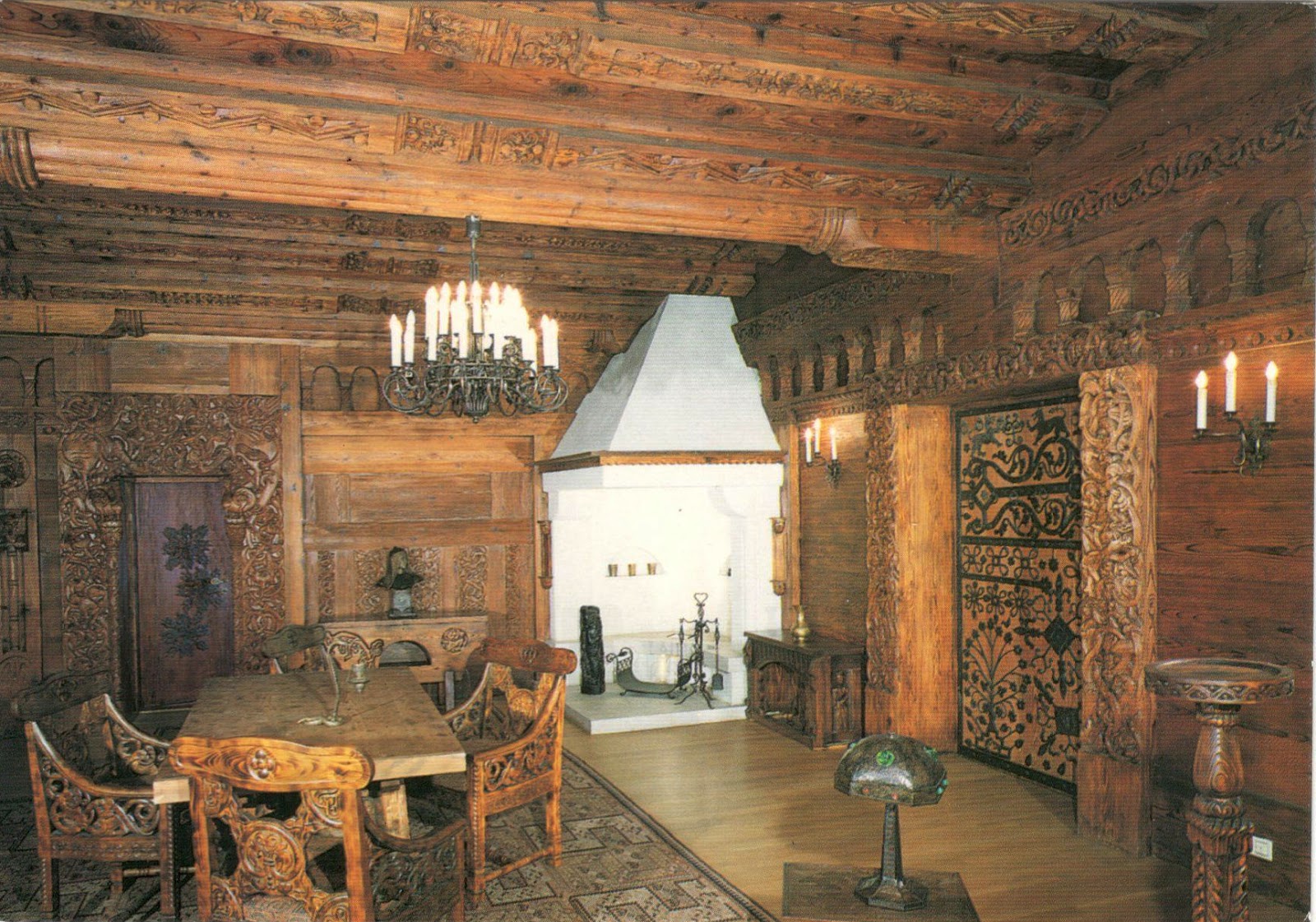
3378 Cotroceni National Museum - The Norwegian Room

Over time, the Cotroceni Ensemble has undergone several changes, but kept all the time both religious function as well as the one of princely residence. Barbu Ştirbey (1849-1853) restored and redecorated the palace, which became his summer residence. In addition, to facilitate links with Bucharest, the prince built a new road that cut the great domain of the monastery, thus separating the princely area from the one of the future Botanical Garden, of which beginnings date back to 1860.

January 20, 2020

3377 IRELAND - Wild Ireland


Ireland has a particularly strong traditional link with donkeys. From the start of the 19th century to the middle of the 20th century, donkeys played a key role in rural lives, especially in the west of the country. Jim Smyth wrote an academic review of the history of donkeys in Ireland in 2014, titled The Strange History of the Irish Donkey. He details the main roles played by donkeys in Irish life, including clearing rocky fields, moving turf from bogs, ploughing, transport of people and goods, grinding corn, and finally, for recreation and as family pets.

3376 CAMBODIA - Royal Ploughing Ceremony


The Royal Ploughing Ceremony is an ancient royal rite held in many Asian countries to mark the traditional beginning of the rice growing season. In the various versions of Ramayana, Sita, the heroine appears from the ploughed earth as a baby when Janaka, the king of Videha ploughs the field in the royal ceremony. This is the earliest historical account of this agricultural ritual Sita#Birth. Traditionally, the ceremony is performed in the month Pisak of the Khmer calendar (usually in May, after european calendar), but varies as it is determined by Hora, marking the beginning of the rainy season.

3375 GERMANY (Bremen) - Postcrossing Meetup, Bremerhaven, 30 June 2018


This postcard, issued special for the first Postcrossing meeting which held in Bremerhaven, depicts Havenwelten (Harbour worlds), a maritime-styled quarter in Bremerhaven (about the city I wrote here). It includes the Atlantic Hotel Sail City , the Climate House Bremerhaven 8° East, the shopping mall Mediterraneo, the Deutsches Schifffahrtsmuseum (German Shipping Museum), the Bremerhaven Zoo (Zoo am Meer) and other maritime-themed places.

January 19, 2020

3374 COMOROS - Old Friday Mosque in Moroni


Located in Medina (the historic centre of Moroni - the federal capital of Comoros), in front of the old harbor and port, the Old Friday Mosque (Ancienne Mosquée de Vendredi) is the oldest mosque in the neighborhood, originally built in 1427, the minaret being added in 1921.

3330, 3349, 3373 SLOVENIA (Slovene Littoral) - The olive harvesting and manufacture of extra virgin olive oil in Piran

3330 The olive harvesting (1)

Posted on 03.01.2020, 11.01.2020, 19.01.2020
Native to the Mediterranean Basin, the olive tree is one of the oldest and more important domesticated crops raised by humans, and it seems that the olives were turned into oil since 6000 BC. Even today, after thousands of years, the olive oil is an important cooking oil in countries surrounding the Mediterranean, and it forms one of the three staple food plants of Mediterranean cuisine, along with wheat and the grape.

3349 The olive harvesting (2)

A blend of sun and sea breeze, along with the microclimate of the salt pans add a distinctly bitter and spicy flavour to the olives grown in Istria Peninsula, in the area between the Adriatic Sea and the Karst Rim, therefore also in Piran. As a result, the extra virgin olive oil from Slovenian Istria has a protected indication of origin, and the region was proclaimed the best olive oil region in the world in 2016 and 2017. The olive harvesting season extends from October to November. Carefully picked olives make their way to torklje, a special oil press from which oil flows.

3373 Manufacture by cold pressing, in the manual torklja press,
of extra virgin olive oil
 

January 18, 2020

3364-3371 FRANCE (Île-de-France) - Musée de la Poupée in Paris

3364 Two Bleuette dolls (left - 1920s, right - 1930)

The Musée de la Poupée was a private doll museum located in Paris, in a quiet alley in the very crowded Marais district, between the Pompidou Center and the Museum of Jewish Art and History, established in 1994 and closed in September 2017. It contained a permanent collection of more than 500 French dolls (toys, automatons, miniature mannequins, divination dolls and witchcraft figurines), an army of strange beauty that unveils mankind's universal fascination for self representation.

3365 Two Bleuette dolls (left - 1934-1940, right - 1928)

Made out of cloth, rubber, celluloid, wax, bisque, porcelain, plastic and even human hair, their bodies and their shapes defined an ideal of feminity that fluctuated through the canon of beauty of their era. Sometimes showcased in dioramas that mimic hausmanian cabinets, tea parties or kitchy seashores, the dolls reenact the illusion of life in the most bizarre of ways, stuck in timeless girly stereotypes. One room focused on doll-making and the materials used in dolls. The museum also presented temporary exhibits and lectures.

3366 A Bleuette doll (1941-1946)

Under the Second Empire, the doll has first represented the lady morphology. These rich and refined lady-dolls are particularly remarquable for their trousseau and accessories reflecting the fashion of their time. First made of wood and composition, they had a bisque (mat porcelain) head and a leather or wood body. In 1878 a new type of dolls appeared at the universal exhibition of Paris: the bisque headed "bebe" that represented from then on the child from 3 to 12 years old.

3367 Three Bleuette dolls (1946)

The "bebe's" birth is related to the incredible international development of French doll and toy industry. In 1899 the most important French doll makers associated through the SFBJ - Société Française de fabrication de bébés et jouets - in order to fight against the foreign competition and mainly the German one. The SFBJ production is outstanding for the exceptional series of "character bebes" with expressive faces and child or even baby bodies.

3368 Baby doll (1930s)

During the roaring twenties, new materials have been used in the doll industry : celluloïd, composition, papier-mâché, cloth, felt... Simoultaneously a new morphological type of doll raised on the market : the soft body baby representing the new born with a bald big head with side glancing eyes looking very realistic. Chidren's magazines also promoted dolls given as a gift such as Bleuette of La Semaine de Suzette which is probably the most famous with her rich trousseau that could be bought already made or could be sewn by little girls from the patterns published in the magazine.

3369 A Bleuette doll

During the second part of the 20th century, new plastic materials appeared in the doll industry and all the other ones were abandoned. On the other hand, the variety of the dolls of that era is amazing : classic dolls, baby dolls, brand new fashion dolls, soft body babies, caricature or funny dolls. The main firms still using celluloïd or rhodoïd at that time are Raynal, Petitcollin, Nobel, Convert, Urika, Marechal. The ones imposing with new plastic materials are Bella, Gégé, Clodrey and later Corolle. In 1951 the lady magazine Modes & Travaux sold its own dolls for which patterns were published monthly in order to dress them.

3370 A Bleuette doll (1927-1933)

Created by two passionate collectors, Guido and Samy Odin, father and son, the establishment has never benefited from any state subsidy or private aid, and closed its doors due to financial difficulties. After the closure of the museum, Samy Odin found new operating solutions in the same field. He continued to activated as specialist in ancient dolls, antiquarian dealer, author and speaker, as well as organizer of occasional exhibitions and events related to his specialties, under a new structure named Cherubim, which popularize the culture in the various representations of childhood, from yesterday to today.

3371 A Bleuette doll (1930)

From the installation of exhibitions all over the world to the purchase and sale of dolls and any other collectible object with a childlike image, from the organization of conferences, seminars and workshops to the proposal of trips and stays study for an informed public. But also the expertise of dolls, toys, old papers and specialized books, the publishing of reference books and articles, the writing of sales catalogs, up to coaching for collectors.